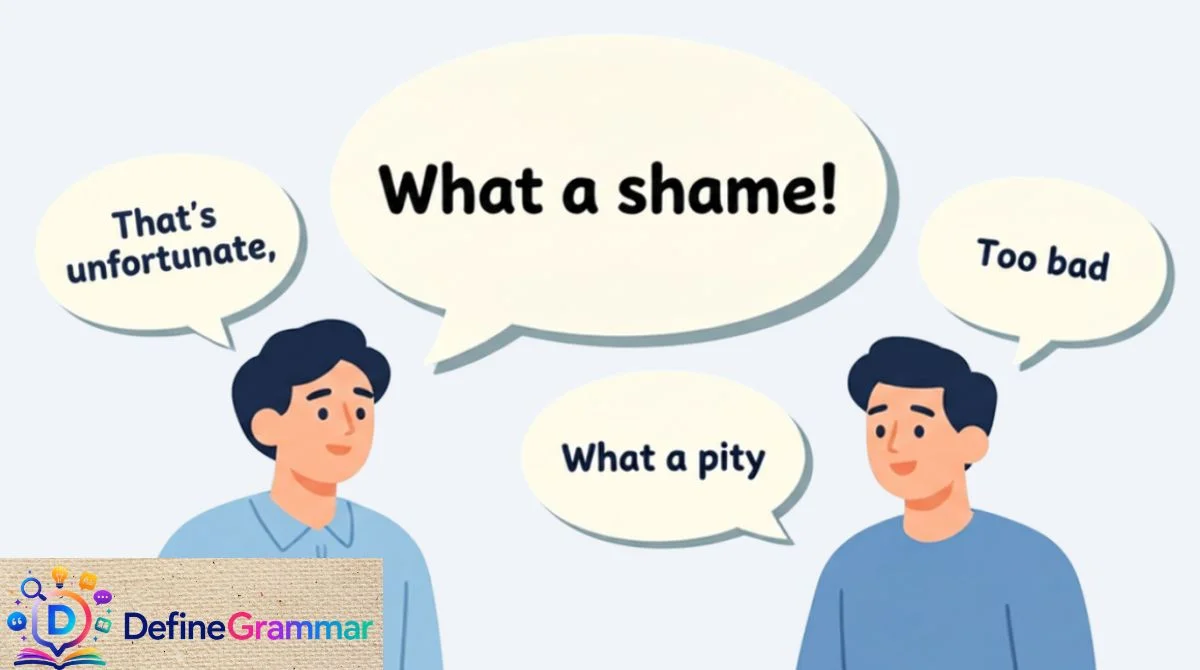
We say “what a shame” when something disappointing happens. Maybe a friend missed a big event. Maybe a project failed. Maybe plans fell through at the last minute. This phrase shows sympathy and mild disappointment at the same time.
But using the same phrase again and again can sound flat. It can also feel too casual for a business email or too soft for a serious conversation. That’s why learning other ways to say “what a shame” helps you sound more natural, more thoughtful, and more fluent.
Word choice changes tone. It changes how professional you sound. It changes how warm or distant you appear. For example, saying “What a shame!” to a coworker is friendly and informal. Saying “That is truly unfortunate” in a business email sounds polished and respectful. Same feeling, different impact.
This guide gives you simple, natural alternatives for every situation, from texting a friend to writing a formal report.
What Does “What a Shame” Mean?
“What a shame” is an idiomatic expression. People use it to react to disappointing or unlucky news. It is not anger. It is gentle sadness mixed with sympathy.
Grammar form: It functions as an interjection or exclamatory phrase. It often stands alone as a short sentence.
Synonyms: That’s unfortunate, what a pity, too bad, that’s disappointing.
Opposite tone: What great news, how wonderful, that’s fantastic.
Sample sentences:
- “She missed her flight.” “Oh, what a shame!”
- What a shame the picnic got cancelled because of rain.
When to Use “What a Shame”
Spoken English: Very common. Friends and family use it casually in daily talk.
Business English: Used carefully. Often replaced with softer, more formal phrases.
Emails and Messages: Works in casual messages but rarely in formal business emails.
Social Media: Common and natural. People use it under comments or posts about bad news.
Academic Writing: Avoided. Academic tone needs neutral, objective language instead.
Professional Meetings: Used occasionally, but more polished alternatives are safer.
Is “What a Shame” Polite or Professional?
This phrase sits in a friendly, conversational zone. It is polite, but not deeply formal.
- Polite: Yes, it shows care and empathy.
- Neutral: It leans slightly informal.
- Strong or Soft: It is soft, not intense.
- Formal vs Informal: Mostly informal, though acceptable in semi-formal speech.
Etiquette tip: Better for casual workplace chats. Avoid it in formal corporate emails, official reports, or client-facing documents. Choose “unfortunate” or “regrettable” instead in those settings.
Pros and Cons of Using “What a Shame”
✔ Pros:
- Sounds warm and caring
- Easy for beginners to learn
- Works well in spoken conversation
- Shows quick emotional support
✘ Cons:
- Too casual for formal writing
- Can feel repetitive if overused
- May sound less professional in business settings
- Doesn’t fit academic tone
Alternatives to “What a Shame”
1. That’s Unfortunate
Meaning: A neutral way to express disappointment.
Explanation: This phrase sounds calm and balanced. It shows sympathy without being overly emotional, which makes it useful in mixed settings.
Grammar Note: Formal phrase, adjective-based expression.
Example Sentence: That’s unfortunate. I hope things improve soon.
Best Use: Business, Email, Formal speech
Worst Use: Casual chats with close friends, where it may feel distant.
Tone: Neutral, Professional
Level: Intermediate
Similarity Score: 9/10
Replaceability Tip: Use this when you want to stay professional but still show care.
2. What a Pity
Meaning: Expresses mild sadness about a disappointing event.
Explanation: This phrase feels gentle and slightly old-fashioned but still common in British English.
Grammar Note: Idiomatic exclamation.
Example Sentence: What a pity you couldn’t join us for dinner.
Best Use: Conversation, Informal writing
Worst Use: Strict corporate documents.
Tone: Soft, Friendly
Level: Beginner
Similarity Score: 9/10
Replaceability Tip: Use this as a direct, simple substitute in everyday talk.
3. Too Bad
Meaning: A casual way to express disappointment.
Explanation: Short and quick, often used in spoken English among friends or coworkers in relaxed settings.
Grammar Note: Informal phrase.
Example Sentence: Too bad the concert got cancelled.
Best Use: Texting, Casual talk
Worst Use: Formal emails or academic writing.
Tone: Informal, Neutral
Level: Beginner
Similarity Score: 8/10
Replaceability Tip: Great for quick, casual reactions.
4. That’s a Real Bummer
Meaning: Expresses strong informal disappointment.
Explanation: Popular in American English, especially among younger speakers and in relaxed conversation.
Grammar Note: Slang phrase.
Example Sentence: That’s a real bummer, I was looking forward to that trip.
Best Use: Friends, Social media
Worst Use: Workplace emails or professional speech.
Tone: Casual, Friendly
Level: Beginner
Similarity Score: 7/10
Replaceability Tip: Use only in relaxed, personal conversations.
5. How Disappointing
Meaning: Highlights the feeling of letdown directly.
Explanation: This phrase focuses more on the feeling itself rather than sympathy for the other person.
Grammar Note: Adjective-based exclamation.
Example Sentence: How disappointing that the meeting got postponed again.
Best Use: Workplace, Semi-formal speech
Worst Use: Very formal written reports.
Tone: Neutral, Slightly Strong
Level: Intermediate
Similarity Score: 8/10
Replaceability Tip: Use when the disappointment affects you directly.
6. That’s Regrettable
Meaning: A formal way to express sadness about an outcome.
Explanation: Common in professional and official writing because it stays composed and respectful.
Grammar Note: Formal adjective phrase.
Example Sentence: That’s regrettable, but we will adjust our plans accordingly.
Best Use: Business emails, Reports
Worst Use: Casual texting, where it sounds stiff.
Tone: Formal, Professional
Level: Advanced
Similarity Score: 9/10
Replaceability Tip: Best choice for client communication or official statements.
7. Such a Letdown
Meaning: Describes something that failed to meet expectations.
Explanation: This phrase focuses on disappointment caused by unmet hopes, not just bad luck.
Grammar Note: Informal noun phrase.
Example Sentence: The movie was such a letdown after all that hype.
Best Use: Casual reviews, Conversation
Worst Use: Formal business writing.
Tone: Informal, Honest
Level: Intermediate
Similarity Score: 7/10
Replaceability Tip: Use when expectations were high but results were poor.
8. What a Waste
Meaning: Expresses regret over lost potential or opportunity.
Explanation: Often used when talent, time, or resources are not used well.
Grammar Note: Exclamatory noun phrase.
Example Sentence: What a waste, he had so much potential.
Best Use: Conversation, Informal commentary
Worst Use: Formal documents.
Tone: Strong, Direct
Level: Intermediate
Similarity Score: 6/10
Replaceability Tip: Use specifically for missed potential, not general bad luck.
9. That’s Heartbreaking
Meaning: Expresses deep sadness about a serious disappointment.
Explanation: Stronger than “what a shame,” this phrase fits emotional or serious situations.
Grammar Note: Adjective phrase.
Example Sentence: That’s heartbreaking news about the company closing down.
Best Use: Emotional conversations, Serious topics
Worst Use: Minor, everyday disappointments.
Tone: Strong, Emotional
Level: Intermediate
Similarity Score: 6/10
Replaceability Tip: Save this for genuinely sad or serious news.
10. Sad to Hear That
Meaning: A gentle, personal expression of sympathy.
Explanation: Warm and simple, often used right after someone shares bad news.
Grammar Note: Adjective phrase with implied subject.
Example Sentence: Sad to hear that, I hope you feel better soon.
Best Use: Conversation, Messages
Worst Use: Formal written reports.
Tone: Friendly, Soft
Level: Beginner
Similarity Score: 8/10
Replaceability Tip: Great for personal, supportive responses.
11. That’s Rough
Meaning: Shows casual sympathy for a difficult situation.
Explanation: Common in spoken English, especially among peers.
Grammar Note: Informal adjective phrase.
Example Sentence: That’s rough, man. I’m sorry that happened.
Best Use: Friends, Casual talk
Worst Use: Professional settings.
Tone: Casual, Sympathetic
Level: Beginner
Similarity Score: 7/10
Replaceability Tip: Use with close friends or informal peers.
12. Bad Luck
Meaning: Points to unfortunate timing or chance.
Explanation: Often used when the outcome was outside anyone’s control.
Grammar Note: Noun phrase.
Example Sentence: Bad luck, the store closed five minutes before you arrived.
Best Use: Casual conversation
Worst Use: Formal writing.
Tone: Neutral, Casual
Level: Beginner
Similarity Score: 7/10
Replaceability Tip: Use when chance, not choice, caused the issue.
13. I’m Sorry to Hear That
Meaning: A polite, caring response to disappointing news.
Explanation: Works in nearly every setting because it focuses on the listener’s feelings.
Grammar Note: Formal-neutral expression.
Example Sentence: I’m sorry to hear that the trip was cancelled.
Best Use: Email, Conversation, Workplace
Worst Use: Rarely a poor choice; very versatile.
Tone: Polite, Warm
Level: Beginner
Similarity Score: 9/10
Replaceability Tip: Safe choice for almost any situation, formal or informal.
14. What a Sad Outcome
Meaning: Highlights disappointment in the final result of something.
Explanation: Useful when describing the ending of a project, event, or story.
Grammar Note: Descriptive noun phrase.
Example Sentence: What a sad outcome after months of hard work.
Best Use: Reports, Reflective writing
Worst Use: Quick, casual chats.
Tone: Formal, Reflective
Level: Advanced
Similarity Score: 8/10
Replaceability Tip: Use when discussing results, not sudden news.
15. That’s Disheartening
Meaning: Describes something that lowers motivation or hope.
Explanation: Common in professional and academic contexts to describe discouraging results.
Grammar Note: Formal adjective phrase.
Example Sentence: That’s disheartening, but the team will try again next quarter.
Best Use: Workplace, Reports
Worst Use: Very casual texting.
Tone: Formal, Serious
Level: Advanced
Similarity Score: 8/10
Replaceability Tip: Best for situations affecting motivation or morale.
16. A Real Shame, That
Meaning: A slightly more emphatic, conversational version of the original phrase.
Explanation: Common in British English speech patterns.
Grammar Note: Informal exclamation.
Example Sentence: A real shame, that. He worked so hard on it.
Best Use: Spoken British English
Worst Use: Written formal documents.
Tone: Informal, Conversational
Level: Intermediate
Similarity Score: 9/10
Replaceability Tip: Use in natural spoken dialogue for authenticity.
17. That’s Not Great News
Meaning: A mild, indirect way to express disappointment.
Explanation: Softens bad news without sounding overly emotional.
Grammar Note: Neutral phrase.
Example Sentence: That’s not great news, but we’ll figure out a solution.
Best Use: Workplace, Email
Worst Use: Deep emotional conversations.
Tone: Neutral, Calm
Level: Intermediate
Similarity Score: 7/10
Replaceability Tip: Use when softening bad news in professional settings.
18. What a Missed Opportunity
Meaning: Expresses regret over a chance that was lost.
Explanation: Focuses on potential that was not realized.
Grammar Note: Descriptive noun phrase.
Example Sentence: What a missed opportunity to expand into a new market.
Best Use: Business, Strategy discussions
Worst Use: Casual daily conversation.
Tone: Professional, Reflective
Level: Advanced
Similarity Score: 7/10
Replaceability Tip: Use specifically for lost chances or potential.
19. That’s a Tough Break
Meaning: Shows sympathy for unfair or unlucky circumstances.
Explanation: Common in American English, especially in sports or competitive contexts.
Grammar Note: Informal idiom.
Example Sentence: That’s a tough break, losing the contract at the last minute.
Best Use: Casual conversation, Sports talk
Worst Use: Formal business writing.
Tone: Casual, Sympathetic
Level: Intermediate
Similarity Score: 7/10
Replaceability Tip: Use for situations involving unfair luck or timing.
20. Such Bad Timing
Meaning: Points out that the moment made things worse.
Explanation: Focuses on timing as the main cause of disappointment.
Grammar Note: Descriptive phrase.
Example Sentence: Such bad timing, the rain started right before the wedding.
Best Use: Conversation, Storytelling
Worst Use: Strict formal reports.
Tone: Neutral, Casual
Level: Beginner
Similarity Score: 6/10
Replaceability Tip: Use when timing, not outcome, is the main issue.
21. That’s a Setback
Meaning: Describes a temporary obstacle or delay.
Explanation: Common in business and project management language.
Grammar Note: Formal noun phrase.
Example Sentence: That’s a setback, but the project timeline can still work.
Best Use: Business, Project updates
Worst Use: Personal emotional conversations.
Tone: Professional, Calm
Level: Advanced
Similarity Score: 6/10
Replaceability Tip: Use for problems that can still be fixed or improved.
22. A Pity, Indeed
Meaning: A more formal, slightly old-fashioned agreement of disappointment.
Explanation: Adds emphasis while staying polite and composed.
Grammar Note: Formal exclamation.
Example Sentence: A pity, indeed, that the negotiations fell through.
Best Use: Formal speech, Written dialogue
Worst Use: Texting or casual chat.
Tone: Formal, Polished
Level: Advanced
Similarity Score: 9/10
Replaceability Tip: Use in writing that needs a refined, literary tone.
23. That’s Quite Unfortunate
Meaning: A stronger, more formal version of “that’s unfortunate.”
Explanation: Adds emphasis while keeping a professional tone.
Grammar Note: Formal adjective phrase.
Example Sentence: That’s quite unfortunate, especially given the time invested.
Best Use: Business emails, Reports
Worst Use: Very casual speech.
Tone: Formal, Measured
Level: Advanced
Similarity Score: 9/10
Replaceability Tip: Use when you want extra emphasis in professional writing.
24. What a Downer
Meaning: Casual slang for something disappointing or mood-lowering.
Explanation: Very informal, often used among friends or on social media.
Grammar Note: Slang noun phrase.
Example Sentence: What a downer, the party got cancelled.
Best Use: Social media, Friends
Worst Use: Any professional or academic context.
Tone: Casual, Playful
Level: Beginner
Similarity Score: 6/10
Replaceability Tip: Use only in light, informal settings.
25. That’s Discouraging
Meaning: Describes something that reduces hope or motivation.
Explanation: Common in coaching, teaching, and workplace feedback contexts.
Grammar Note: Formal adjective phrase.
Example Sentence: That’s discouraging, but the team should keep pushing forward.
Best Use: Workplace, Coaching conversations
Worst Use: Light, casual remarks.
Tone: Formal, Supportive
Level: Advanced
Similarity Score: 8/10
Replaceability Tip: Use when encouraging someone despite bad news.
26. Tough Luck
Meaning: A blunt way to acknowledge bad fortune.
Explanation: Can sound sympathetic or slightly dismissive depending on tone of voice.
Grammar Note: Informal noun phrase.
Example Sentence: Tough luck, but there’s always next time.
Best Use: Casual conversation
Worst Use: Formal writing or sensitive topics.
Tone: Informal, Direct
Level: Beginner
Similarity Score: 6/10
Replaceability Tip: Use carefully, as tone of voice changes its meaning.
27. That’s Such a Loss
Meaning: Expresses regret over something valuable that is gone.
Explanation: Often used for missed chances, talent, or resources.
Grammar Note: Descriptive phrase.
Example Sentence: That’s such a loss for the team, he was a great leader.
Best Use: Reflective conversation, Tributes
Worst Use: Minor everyday disappointments.
Tone: Formal, Reflective
Level: Advanced
Similarity Score: 7/10
Replaceability Tip: Use for significant, meaningful losses.
28. That’s Disappointing News
Meaning: A clear, direct way to describe unwelcome information.
Explanation: Neutral and professional, commonly used in workplace updates.
Grammar Note: Formal noun phrase.
Example Sentence: That’s disappointing news, but we’ll plan our next steps.
Best Use: Business, Emails
Worst Use: Deeply emotional personal situations.
Tone: Professional, Neutral
Level: Intermediate
Similarity Score: 8/10
Replaceability Tip: Best for workplace updates and announcements.
29. What a Letdown That Was
Meaning: Reflects on a disappointing experience after it happened.
Explanation: Often used when looking back at an event or outcome.
Grammar Note: Informal reflective phrase.
Example Sentence: What a letdown that was, after all the planning.
Best Use: Storytelling, Casual reflection
Worst Use: Formal reports.
Tone: Informal, Reflective
Level: Intermediate
Similarity Score: 7/10
Replaceability Tip: Use when discussing past events with regret.
30. That’s Truly Unfortunate
Meaning: A polished, sincere way to express disappointment.
Explanation: Adds warmth while remaining professional and respectful.
Grammar Note: Formal adjective phrase.
Example Sentence: That’s truly unfortunate, and I appreciate you sharing the update.
Best Use: Business emails, Formal speech
Worst Use: Casual texting.
Tone: Formal, Sincere
Level: Advanced
Similarity Score: 9/10
Replaceability Tip: Use when you want formality with genuine warmth.
Mini Dialogue Examples
Formal Dialogue
A: We were unable to secure the contract this quarter. B: That’s truly unfortunate. Let’s review what went wrong and adjust our approach.
Informal Dialogue
A: I missed the concert because my car broke down. B: Oh no, that’s a real bummer! Did you get a refund at least?
Business Email Style
Subject: Update on Project Timeline
Hi Sarah,
I wanted to update you on the delay with the vendor shipment. That’s regrettable, but we are adjusting the schedule to keep things on track. I’ll send a revised timeline by Friday.
Best regards, James
Mistakes to Avoid
- Using slang like “what a downer” in professional emails
- Overusing “what a shame” until it sounds repetitive
- Mixing very formal phrases with casual conversation
- Using strong phrases like “heartbreaking” for minor issues
- Forgetting that tone of voice changes meaning in phrases like “tough luck”
- Using British-style phrases like “a pity, indeed” in casual American chats
- Choosing overly dramatic phrases for small, everyday disappointments
Cultural and Tone Tips
In UK English, phrases like “what a pity” and “a real shame, that” sound natural and common in daily speech. In US English, casual phrases like “that’s a bummer” or “tough break” are more frequent, especially among younger speakers. In casual social English, short reactions like “too bad” or “what a downer” dominate text messages and social media comments. Across all dialects, tone of voice and context shape how sympathetic or dismissive a phrase feels.
Comparison Table
| Phrase | Tone | Best Context | Professional Level | Example |
|---|---|---|---|---|
| That’s unfortunate | Neutral | Business, Email | High | That’s unfortunate, we’ll adjust the plan. |
| What a pity | Soft | Conversation | Medium | What a pity you missed it. |
| That’s a real bummer | Casual | Friends, Social media | Low | That’s a real bummer, sorry to hear it. |
| That’s regrettable | Formal | Reports, Emails | High | That’s regrettable, but understandable. |
| I’m sorry to hear that | Warm | Any setting | High | I’m sorry to hear that happened. |
| That’s a setback | Professional | Business updates | High | That’s a setback, but we’ll recover. |
| Tough luck | Direct | Casual talk | Low | Tough luck, better luck next time. |
What a Shame Synonym Slang

If you want a more casual or conversational way to say “what a shame,” there are plenty of slang expressions that native English speakers use in everyday conversations. These alternatives can sound sympathetic, disappointed, or even slightly sarcastic depending on the situation and tone of voice.
Some common slang synonyms include:
- That sucks.
- Bummer.
- Tough luck.
- What a drag.
- That’s rough.
- What a bummer.
- Too bad.
- Ouch.
- That’s unfortunate.
- Well, that stinks.
For example:
- “You missed the concert? That’s a bummer.“
- “Your flight got canceled? That sucks.“
- “You didn’t get the job? That’s rough.“
These expressions are best suited for conversations with friends, family members, or coworkers in informal settings. Avoid using slang in business emails, academic writing, or professional communication where more formal language is expected.
It’s a Shame Synonym Formal

In professional writing and formal conversations, replacing “it’s a shame” with more polished language creates a respectful and professional tone. These alternatives are commonly used in workplaces, academic discussions, and official correspondence.
Formal synonyms include:
- It is unfortunate.
- It is regrettable.
- It is disappointing.
- It is unfortunate to hear.
- It is deeply regrettable.
- That is most unfortunate.
- It is a pity.
- It is saddening.
- It is disheartening.
- It is unfortunate that.
Examples:
- It is unfortunate that the event had to be canceled.
- It is regrettable that we cannot approve the request.
- It is disappointing to see the project delayed.
- It is a pity that many people missed the opportunity.
These expressions communicate sympathy or disappointment while maintaining a professional and respectful tone.
That’s a Shame Meaning
“That’s a shame” is an English expression used to show sympathy, disappointment, or regret when something unfortunate happens. It tells another person that you feel sorry about their situation or that you recognize something unpleasant has occurred.
People commonly use this phrase after hearing bad news, missed opportunities, accidents, or disappointing outcomes.
Examples include:
- “I couldn’t attend the wedding.”
“That’s a shame.” - “The restaurant closed permanently.”
“That’s a shame.” - “She injured her ankle before the race.”
“That’s a shame.”
The phrase does not literally mean someone should feel shame or embarrassment. Instead, it expresses kindness, empathy, and concern.
What a Shame Meaning
“What a shame” is an exclamation that expresses strong disappointment, sadness, or regret about an unfortunate event. Compared with “that’s a shame,” it often sounds slightly more emotional or emphatic.
People use it when something could have had a better outcome or when someone misses an opportunity.
Examples:
- “The concert was canceled because of the weather.”
“What a shame.” - “He studied hard but failed the exam.”
“What a shame.” - “The historic building was destroyed.”
“What a shame.”
Depending on the speaker’s tone, the phrase may express genuine sympathy or mild disappointment.
Such a Shame Meaning
“Such a shame” emphasizes disappointment even more than “that’s a shame.” The word “such” adds emotional intensity, making the speaker sound more heartfelt or sincere.
It is often used when the situation feels especially unfortunate or when the consequences are significant.
Examples:
- “She had to leave the competition because of an injury.”
“That’s such a shame.” - “The museum closed before we arrived.”
“Such a shame.” - “He turned down an incredible opportunity.”
“It’s such a shame.”
This expression is suitable for both spoken English and informal writing, especially when showing empathy.
That’s a Shame Word Hike
In the mobile word game Word Hike, players are often asked to find synonyms or related words for a clue such as “That’s a shame.” Because the correct answer depends on the specific puzzle, level, or number of letters, there isn’t one universal solution.
Possible answers may include:
- Pity
- Alas
- Regret
- Unfortunate
- Too bad
- Sorry
- Sadly
If you’re solving a Word Hike puzzle, check the number of letters and any existing letters on the board to determine the correct answer.
Shame Synonym and Antonym
The word “shame” can refer to embarrassment, regret, dishonor, or disappointment depending on the context. Because it has multiple meanings, both its synonyms and antonyms vary.
Synonyms of Shame
When referring to embarrassment:
- Humiliation
- Embarrassment
- Disgrace
- Dishonor
- Indignity
- Mortification
- Self-consciousness
- Guilt
- Regret
- Remorse
When expressing disappointment:
- Pity
- Misfortune
- Sadness
- Disappointment
- Regret
- Tragedy
- Unfortunate event
Antonyms of Shame
- Pride
- Honor
- Respect
- Dignity
- Confidence
- Self-esteem
- Achievement
- Glory
- Admiration
- Success
Choosing the correct synonym or antonym depends on whether “shame” refers to embarrassment, moral guilt, or an unfortunate situation.
Oh That’s a Shame
“Oh, that’s a shame” is a natural English expression used to show immediate sympathy or disappointment after hearing unfortunate news. The word “oh” adds warmth and makes the response sound more caring and spontaneous.
Native speakers frequently use this phrase in everyday conversations when reacting to someone’s bad experience.
Examples:
- “My vacation was canceled.”
“Oh, that’s a shame.” - “I lost my wallet.”
“Oh, that’s a shame. I hope you find it.” - “She couldn’t attend the graduation.”
“Oh, that’s a shame.”
This expression is polite, empathetic, and appropriate in both personal and workplace conversations. However, if the situation is very serious, a more compassionate response such as “I’m so sorry to hear that” or “My condolences” may be more appropriate than simply saying “Oh, that’s a shame.”
Frequently Asked Questions
What can I say instead of “what a shame”?
You can say “That’s unfortunate,” “What a pity,” “That’s regrettable,” or “That’s disappointing.”
How do you say “what a shame” in other words?
Use alternatives like “What a pity,” “How unfortunate,” “That’s regrettable,” or “That’s too bad.”
What’s another way of saying “it’s a shame”?
You can say “It’s unfortunate,” “It’s regrettable,” “It’s disappointing,” or “It’s disheartening.”
What is a metaphor for shame?
A powerful metaphor is “Shame is a heavy cloak that weighs down the heart.”
Conclusion
Learning different ways to say “what a shame” helps you sound more natural and confident in English. It allows you to match your tone to the situation, whether you’re chatting with a friend, writing a business email, or responding to sad news. Strong word choice builds clarity and shows emotional intelligence. Practice using these alternatives in real conversations, emails, and writing. Over time, switching between formal and informal expressions will feel easy and natural, making your English sound more fluent and expressive.

Riaz Ahmad is the founder and writer at DefineGrammar.com, dedicated to simplifying English grammar for students and writers worldwide. With a passion for language, he breaks down complex grammar rules into clear, practical lessons, helping readers write with confidence and clarity every day.