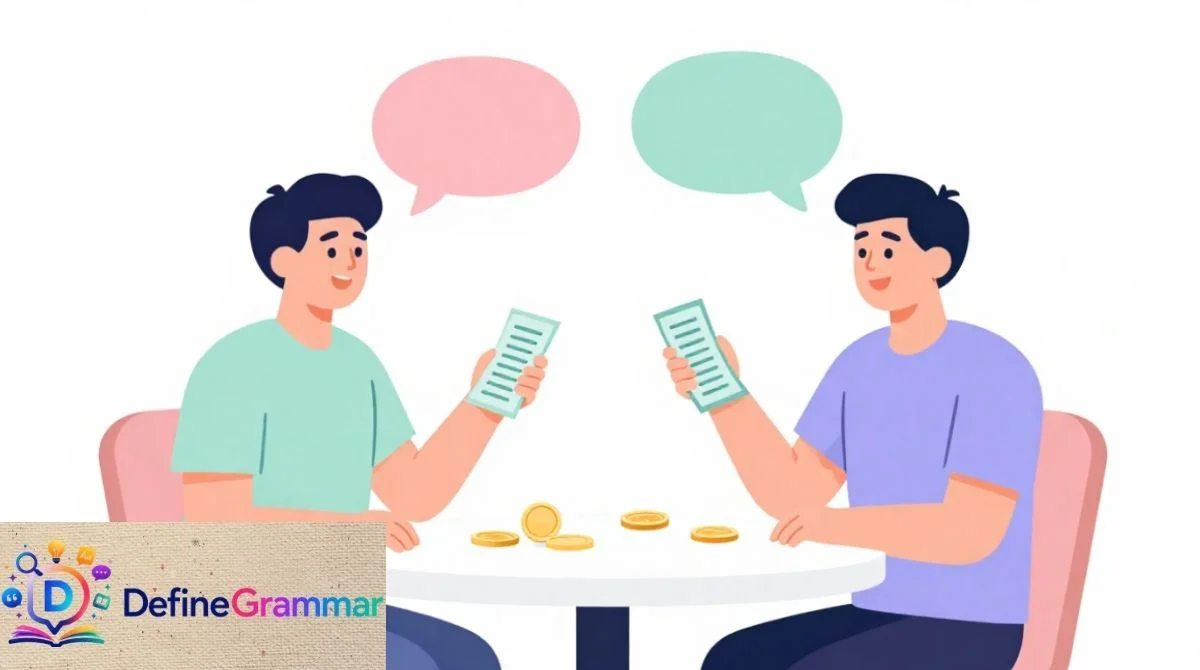
When you split a bill or cover your own food cost, you don’t always need to say “pay for your own meal.” This phrase is common, but it can sound flat or repeat too often in writing and speech. Choosing a fresh expression makes your English sound natural and confident.
Word choice matters more than people think. A formal email needs careful, polite language. A text to a friend can be short and casual. Using the same phrase again and again makes writing boring and can even sound robotic. Strong alternatives help you sound clear, polite, and professional in any situation, from business lunches to casual hangouts.
Here is a quick contrast. Formal: “I will be paying for my own meal today.” Informal: “I got my own food, don’t worry about it.” Same meaning, different tone. This guide gives you more than 22 ways to express this idea so you always have the right words ready.
What Does “Pay for Your Own Meal” Mean?
Pay for your own meal means you cover the cost of your own food and drink, instead of someone else paying for you. It often comes up at restaurants, work lunches, or social events when people decide how to split costs.
Grammar form: This is a verb phrase. It uses the verb “pay” plus a noun phrase (“your own meal”). It is not slang or an idiom, so it works in almost any setting.
Synonyms include “split the bill,” “go Dutch,” and “cover your own tab.” The opposite tone would be phrases like “treat someone” or “pick up the check,” where one person pays for everyone.
Sample sentences:
- “Don’t worry, I’ll pay for my own meal.”
- “We agreed that everyone would pay for their own meal at the dinner.”
When to Use “Pay for Your Own Meal”
Spoken English: This phrase works well in daily conversation, especially when offering to cover your own cost during a casual outing.
Business English: It fits well in discussions about expense policies, client lunches, or team meals where reimbursement rules apply.
Emails / Messages: You can use it when confirming payment plans before an event, such as a company dinner or networking lunch.
Social media: It’s common in casual posts about brunch outings, group trips, or friend meetups where costs are shared.
Academic writing: It can appear in essays about social customs, economics, or cultural studies, especially when discussing dining habits.
Professional meetings: It’s useful when clarifying who covers costs during work trips, conferences, or client meetings.
Is “Pay for Your Own Meal” Polite or Professional?
This phrase sits comfortably in the neutral zone. It isn’t rude, and it isn’t overly formal either.
- Polite: Yes, especially when said with a smile or soft tone, like “I’ll just pay for my own meal, no problem.”
- Neutral: It works fine in both casual and semi-formal settings.
- Strong: It can sound a bit blunt if said sharply, like a refusal of generosity.
- Soft: Adding “I don’t mind” or “honestly” softens it nicely.
- Formal vs Informal: It leans informal but is acceptable in semi-formal writing too.
Etiquette tip: This phrase is fine for workplace lunches, but in very formal corporate emails, a phrase like “I will cover my own expenses” sounds more polished.
Pros & Cons of Using “Pay for Your Own Meal”
✔ Pros:
- Clear and easy to understand
- Works in spoken and written English
- Sounds polite and considerate
- Useful in many social situations
✘ Cons:
- Can feel repetitive if overused
- Sounds plain in formal business writing
- Doesn’t show personality or warmth
- May sound abrupt without softening words
Alternatives to “Pay for Your Own Meal”
Cover My Own Bill
Meaning: To pay the full cost of your meal yourself.
Explanation: This phrase feels modern and slightly more polished than “pay for your own meal.” It often appears in restaurant settings where each person handles their own check.
Grammar Note: Verb phrase.
Example Sentence: “Don’t wait for me, I’ll cover my own bill.”
Best Use: Spoken English, casual dining, work lunches.
Worst Use: Very formal legal or academic writing.
Tone: Neutral, friendly.
Level: Beginner.
Similarity Score: 9/10.
Replaceability Tip: Use this when you want a slightly more natural-sounding option in daily speech.
Split the Bill
Meaning: To divide the total cost between everyone at the table.
Explanation: This phrase is extremely common among friends and coworkers. It doesn’t always mean paying only for yourself, but it’s often used that way in casual talk.
Grammar Note: Verb phrase.
Example Sentence: “Let’s just split the bill evenly.”
Best Use: Casual outings, friend groups, informal meals.
Worst Use: When the cost truly needs to be separate, not divided equally.
Tone: Friendly, casual.
Level: Beginner.
Similarity Score: 7/10.
Replaceability Tip: Use this when the group shares costs equally, not just individually.
Go Dutch
Meaning: An idiom meaning each person pays for their own meal.
Explanation: This idiom is widely known in English-speaking countries. It carries a light, casual tone and works well among friends.
Grammar Note: Idiom.
Example Sentence: “We always go Dutch when we eat out.”
Best Use: Informal conversation, friend groups, social media captions.
Worst Use: Formal business writing or professional emails.
Tone: Casual, friendly.
Level: Intermediate.
Similarity Score: 8/10.
Replaceability Tip: Great for casual storytelling or texting about shared meals.
Pay My Own Way
Meaning: To take financial responsibility for yourself.
Explanation: This phrase carries a sense of independence. It works beyond meals too, such as travel or daily expenses.
Grammar Note: Verb phrase.
Example Sentence: “I always pay my own way when I travel with friends.”
Best Use: Spoken English, personal stories, casual writing.
Worst Use: Strict formal documents.
Tone: Confident, neutral.
Level: Intermediate.
Similarity Score: 8/10.
Replaceability Tip: Use this when expressing independence, not just splitting a bill.
Cover My Own Tab
Meaning: To pay for your own drinks or food bill.
Explanation: “Tab” usually refers to a running bill, often at bars or cafes. This phrase sounds relaxed and modern.
Grammar Note: Verb phrase.
Example Sentence: “It’s fine, I’ll cover my own tab tonight.”
Best Use: Bars, cafes, casual dinners.
Worst Use: Formal restaurant or business settings.
Tone: Casual, friendly.
Level: Intermediate.
Similarity Score: 8/10.
Replaceability Tip: Best for informal drink or food settings, not big formal events.
Pay Separately
Meaning: To pay your portion individually rather than together.
Explanation: This phrase is commonly used directly with waitstaff or cashiers. It’s simple, clear, and practical.
Grammar Note: Adverb phrase with verb.
Example Sentence: “We’d like to pay separately, please.”
Best Use: Restaurants, formal and informal settings.
Worst Use: Casual storytelling, where it sounds too transactional.
Tone: Neutral, polite.
Level: Beginner.
Similarity Score: 9/10.
Replaceability Tip: Perfect for direct communication with service staff.
Foot My Own Bill
Meaning: To personally pay the cost of something.
Explanation: This phrase has a slightly old-fashioned but professional feel. It works well in writing.
Grammar Note: Idiom.
Example Sentence: “I decided to foot my own bill instead of asking for help.”
Best Use: Formal writing, essays, professional speech.
Worst Use: Texting or casual chats.
Tone: Formal, strong.
Level: Advanced.
Similarity Score: 8/10.
Replaceability Tip: Use this in writing that needs a slightly formal, confident tone.
Handle My Own Check
Meaning: To take care of paying your bill yourself.
Explanation: Common in American English, especially in restaurants. It sounds practical and modern.
Grammar Note: Verb phrase.
Example Sentence: “I’ll handle my own check, thanks.”
Best Use: Casual and semi-formal dining.
Worst Use: Academic writing.
Tone: Neutral, polite.
Level: Beginner.
Similarity Score: 9/10.
Replaceability Tip: Use this for quick, polite responses at restaurants.
Settle My Own Bill
Meaning: To complete payment for your own meal.
Explanation: This phrase sounds polished and slightly formal. It works well in professional or polite conversations.
Grammar Note: Verb phrase.
Example Sentence: “I’d prefer to settle my own bill before we leave.”
Best Use: Business lunches, polite conversation.
Worst Use: Very casual texting.
Tone: Formal, polite.
Level: Intermediate.
Similarity Score: 9/10.
Replaceability Tip: Great for professional dinners or client meetings.
Pay My Own Share
Meaning: To pay the portion that belongs to you.
Explanation: This phrase works well when costs are divided based on what each person ordered.
Grammar Note: Noun phrase with verb.
Example Sentence: “I only had a salad, so I’ll pay my own share.”
Best Use: Group meals, casual and semi-formal settings.
Worst Use: Formal legal writing.
Tone: Neutral, friendly.
Level: Beginner.
Similarity Score: 8/10.
Replaceability Tip: Use when emphasizing fairness in cost division.
Take Care of My Own Meal
Meaning: To handle the payment for your food yourself.
Explanation: This phrase sounds warm and polite, often used to reassure others that help isn’t needed.
Grammar Note: Verb phrase.
Example Sentence: “Don’t worry, I’ll take care of my own meal.”
Best Use: Friendly conversations, casual dining.
Worst Use: Strict formal business writing.
Tone: Soft, friendly.
Level: Beginner.
Similarity Score: 9/10.
Replaceability Tip: Best when reassuring someone in a kind tone.
Pick Up My Own Check
Meaning: To pay your own bill at a restaurant.
Explanation: “Pick up the check” usually means paying for everyone, but adding “my own” changes the meaning clearly.
Grammar Note: Idiom.
Example Sentence: “I always pick up my own check when dining with coworkers.”
Best Use: American English, workplace lunches.
Worst Use: British English, where it may sound less natural.
Tone: Confident, neutral.
Level: Intermediate.
Similarity Score: 8/10.
Replaceability Tip: Use this in American workplace settings.
Pay Individually
Meaning: To pay separately from the group.
Explanation: This phrase sounds slightly formal and practical, often used with cashiers or service staff.
Grammar Note: Adverb with verb.
Example Sentence: “Can we pay individually, please?”
Best Use: Restaurants, group events.
Worst Use: Emotional or casual storytelling.
Tone: Neutral, formal.
Level: Beginner.
Similarity Score: 9/10.
Replaceability Tip: Great for clear, polite requests.
Cover My Own Cost
Meaning: To pay for your own expense.
Explanation: This phrase works beyond food too, making it flexible for many situations.
Grammar Note: Verb phrase.
Example Sentence: “I’ll cover my own cost for the trip.”
Best Use: Business and travel contexts.
Worst Use: Very casual texting.
Tone: Neutral, professional.
Level: Intermediate.
Similarity Score: 8/10.
Replaceability Tip: Use when discussing broader expenses, not just meals.
Pay My Own Portion
Meaning: To pay for the part that belongs to you.
Explanation: Similar to “share,” but slightly more formal-sounding.
Grammar Note: Noun phrase with verb.
Example Sentence: “I’ll pay my own portion of the bill.”
Best Use: Group meals, polite conversations.
Worst Use: Very informal slang contexts.
Tone: Neutral, polite.
Level: Intermediate.
Similarity Score: 8/10.
Replaceability Tip: Good for slightly formal group settings.
Take Care of My Own Tab
Meaning: To pay your own running bill yourself.
Explanation: Common at bars or cafes where bills build up over time.
Grammar Note: Verb phrase.
Example Sentence: “I’ll take care of my own tab before I leave.”
Best Use: Casual social settings.
Worst Use: Formal business writing.
Tone: Casual, friendly.
Level: Beginner.
Similarity Score: 8/10.
Replaceability Tip: Best for informal hangouts with drinks involved.
Pay for Myself
Meaning: A short, direct way to say you’ll cover your own cost.
Explanation: This phrase is simple and widely used in everyday English.
Grammar Note: Verb phrase.
Example Sentence: “It’s okay, I can pay for myself.”
Best Use: Daily conversation, casual writing.
Worst Use: Highly formal documents.
Tone: Neutral, polite.
Level: Beginner.
Similarity Score: 10/10.
Replaceability Tip: This is the closest and safest alternative to the original phrase.
Cover My Own Expenses
Meaning: To pay for your own costs, including meals.
Explanation: This phrase sounds professional and works well in writing.
Grammar Note: Verb phrase.
Example Sentence: “Employees must cover their own expenses during personal trips.”
Best Use: Business writing, formal emails.
Worst Use: Casual texting.
Tone: Formal, professional.
Level: Advanced.
Similarity Score: 8/10.
Replaceability Tip: Best choice for corporate or workplace communication.
Settle My Own Portion
Meaning: To finish paying the part that belongs to you.
Explanation: This phrase blends politeness with clarity, often used in semi-formal contexts.
Grammar Note: Verb phrase.
Example Sentence: “I’d like to settle my own portion before dessert arrives.”
Best Use: Polite dining conversations.
Worst Use: Very casual slang chats.
Tone: Formal, polite.
Level: Advanced.
Similarity Score: 8/10.
Replaceability Tip: Use in polite, slightly formal dinner settings.
Pay My Own Way Through
Meaning: To independently cover your own costs over time.
Explanation: Often used in stories about personal independence, like paying through college or a trip.
Grammar Note: Idiom.
Example Sentence: “She paid her own way through the entire trip.”
Best Use: Storytelling, essays, personal experiences.
Worst Use: Quick, direct requests.
Tone: Strong, confident.
Level: Advanced.
Similarity Score: 7/10.
Replaceability Tip: Best for longer stories about independence, not single meals.
Handle My Own Portion
Meaning: To take responsibility for your part of the bill.
Explanation: This phrase feels practical and modern, often used in group settings.
Grammar Note: Verb phrase.
Example Sentence: “I’ll handle my own portion, don’t worry.”
Best Use: Group meals, casual conversations.
Worst Use: Formal academic writing.
Tone: Neutral, friendly.
Level: Intermediate.
Similarity Score: 8/10.
Replaceability Tip: Use when reassuring others in group settings.
Manage My Own Bill
Meaning: To take control of paying for your own meal.
Explanation: Sounds slightly more formal and organized, fitting for professional contexts.
Grammar Note: Verb phrase.
Example Sentence: “I prefer to manage my own bill during client lunches.”
Best Use: Business settings, professional meals.
Worst Use: Casual friend gatherings.
Tone: Professional, neutral.
Level: Advanced.
Similarity Score: 8/10.
Replaceability Tip: Best for workplace or client-related dining.
Pay My Own Part
Meaning: To pay the portion that is yours.
Explanation: A simple, clear phrase that works in almost every setting.
Grammar Note: Noun phrase with verb.
Example Sentence: “I’ll just pay my own part of the order.”
Best Use: Everyday conversation, casual writing.
Worst Use: Highly formal legal documents.
Tone: Neutral, friendly.
Level: Beginner.
Similarity Score: 9/10.
Replaceability Tip: A safe, simple choice for beginners.
Mini Dialogue Examples
Formal Dialogue
A: “Please, allow me to cover dinner tonight.”
B: “That’s kind, but I’d rather settle my own bill.”
Informal Dialogue
A: “You don’t have to pay for me!”
B: “Don’t worry, I’ll just go Dutch with you.”
Business Email-Style Example
“Thank you for organizing the client lunch. Please note that I will cover my own expenses, as per company policy.”
Mistakes to Avoid
- Using “go Dutch” in very formal writing, where it sounds too casual.
- Saying “foot my own bill” in texting, where it feels overly formal.
- Mixing tenses, like “I paying for my own meal” instead of “I am paying.”
- Using “pick up my own check” in British English, where it sounds unnatural.
- Overusing the same phrase repeatedly in one conversation or essay.
- Forgetting politeness markers, like “please” or “thanks,” when asking to pay separately.
- Confusing “split the bill” with “pay for your own meal,” since splitting can mean equal shares, not individual costs.
Cultural & Tone Tips
In UK English, phrases like “go Dutch” and “pay separately” are common and well understood. British speakers often value politeness, so softening words like “would you mind” are added often.
In US English, phrases like “pick up my own check” and “handle my own check” are very common, especially in restaurants and business lunches.
In casual social English, especially online, short phrases like “I got my own” or “I’m good, I’ll pay” are popular and friendly.
Comparison Table
| Phrase | Tone | Best Context | Professional Level | Example |
|---|---|---|---|---|
| Pay for myself | Neutral | Daily conversation | Beginner | “I can pay for myself.” |
| Cover my own bill | Friendly | Casual dining | Beginner | “I’ll cover my own bill.” |
| Go Dutch | Casual | Friend groups | Intermediate | “We always go Dutch.” |
| Settle my own bill | Polite | Business lunches | Intermediate | “I’d like to settle my own bill.” |
| Cover my own expenses | Formal | Corporate emails | Advanced | “I will cover my own expenses.” |
| Pay separately | Neutral | Restaurants | Beginner | “We’d like to pay separately.” |
| Foot my own bill | Formal | Essays, speech | Advanced | “I decided to foot my own bill.” |
Other Ways to Say “Pay for Your Own Meal” in an Email
When writing an email, the phrase “pay for your own meal” can sometimes sound too direct or uncomfortable. A more thoughtful approach is to use polite and friendly wording that clearly communicates the arrangement while maintaining a positive tone. Whether you are organizing a casual gathering, business lunch, or social event, the right words can make guests feel respected.
Here are some polite alternatives:
- “Guests are kindly requested to cover the cost of their own meals.”
- “Please note that everyone will be responsible for their own meal expenses.”
- “We would love for you to join us; meals will be available for purchase individually.”
- “Each guest will take care of their own dining expenses.”
- “Please plan to cover your own meal during the event.”
- “We are excited to gather together. Kindly note that food and drinks will be on an individual basis.”
These phrases sound more considerate because they focus on the event experience rather than emphasizing payment. A warm tone helps guests understand the arrangement without feeling uncomfortable.
“Pay for Your Own Meal” Wording for an Invitation Template
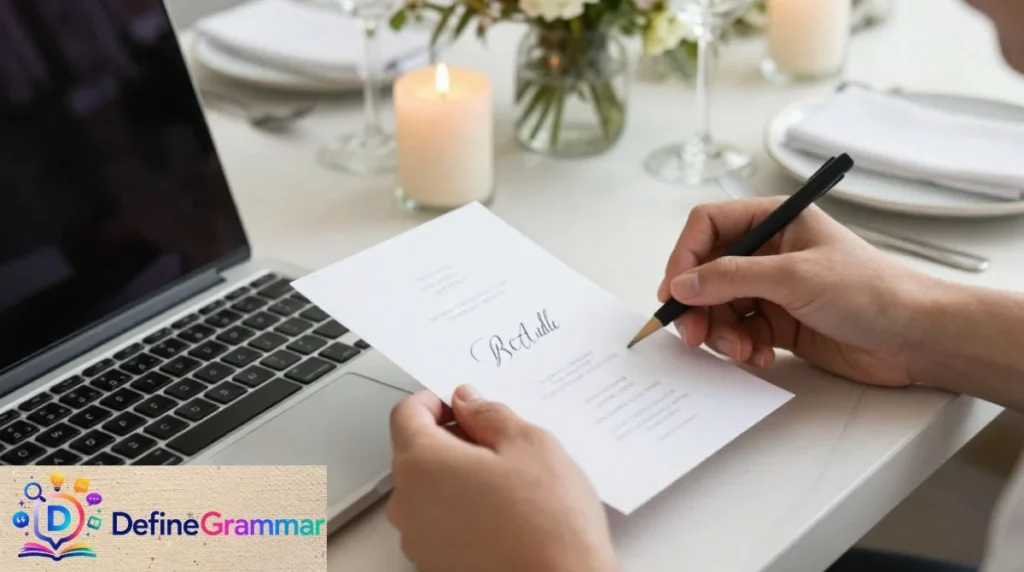
When creating an invitation, it is important to communicate payment details clearly while keeping the message welcoming. Invitations should make guests feel invited first and informed about costs second.
Instead of writing “Pay for your own meal,” you can use more elegant wording such as:
- “Join us for a wonderful evening! Guests are welcome to order and pay for their own meals.”
- “We look forward to celebrating with you. Please note that meals will be individually paid for by guests.”
- “Come enjoy a great time together. Food and beverages will be available at your own expense.”
- “We are gathering for a fun meal together. Each guest will be responsible for their own order.”
A good invitation balances honesty and hospitality. The goal is to avoid surprises while making guests feel valued.
Other Ways to Say “Pay for Your Own Meal” for a Wedding
Wedding invitations require especially careful wording because weddings are often associated with hosting and hospitality. If guests need to pay for their own meals, the message should be communicated gracefully.
Some polite wedding wording examples include:
- “We would be delighted to celebrate with you. Kindly note that guests will be responsible for their own dining arrangements.”
- “Join us for a special celebration. Dinner will be available for guests to purchase individually.”
- “We invite you to share this memorable occasion with us. Please plan to cover your own meal expenses.”
- “Your presence is the greatest gift. Guests may arrange and pay for their own meals.”
For wedding events, using gentle and respectful language is important. A simple explanation can prevent confusion while keeping the focus on celebrating together.
Other Ways to Say “Pay for Your Own Meal” in an Invitation

Invitation wording should always sound friendly rather than demanding. The phrase “pay for your own meal” may feel too blunt, so consider using softer alternatives.
Examples include:
- “Meals will be available, and guests may cover their own orders.”
- “Please note that dining costs will be handled individually.”
- “Everyone is welcome to choose and pay for their own meal.”
- “Guests are invited to enjoy the menu at their own expense.”
- “Food and drinks will be available for individual purchase.”
These options work well for dinners, reunions, group outings, and informal celebrations.
Other Ways to Say “Pay for Your Own Meal” for a Birthday Invitation
Birthday celebrations are usually casual and joyful, so the wording should feel natural and friendly. You can communicate the payment arrangement without making it the main focus of the invitation.
Examples:
- “Come celebrate my birthday with me! Everyone can order and pay for their own meal.”
- “I would love for you to join my birthday celebration. Food and drinks will be available for everyone to purchase individually.”
- “Let’s enjoy a fun birthday gathering together. Guests will kindly cover their own meals.”
- “Your company is what matters most! Please note that meals will be paid for separately.”
A warm birthday invitation focuses on friendship and celebration while providing clear information about expenses.
“Pay for Your Own Meal” Wording Invitation Template Free
A simple invitation template can help you communicate the details professionally and politely.
Example:
“Please join us for a special gathering as we celebrate together. We would love to have you there and enjoy a wonderful time with friends and family. Kindly note that guests will be responsible for their own meal expenses. We look forward to sharing this memorable occasion with you!”
Another option:
“You are warmly invited to join us for dinner and conversation. Everyone is welcome to choose from the menu and take care of their own meal costs. We can’t wait to spend time together!”
These templates can be adjusted for birthdays, dinners, office gatherings, and social events.
“Pay for Your Own Meal” Wording for a Birthday Invitation
A birthday invitation should sound welcoming while clearly explaining the arrangement. Instead of making payment the focus, highlight the celebration first.
Examples:
“Please join me for my birthday celebration! I would love to celebrate this special day with you. Kindly note that guests will be responsible for their own meals.”
“Let’s celebrate another year together with great food and good company. Everyone is invited to order their own meal and cover their individual costs.”
“Your presence will make my birthday special. We’ll enjoy a meal together, with each guest taking care of their own order.”
These phrases maintain a friendly atmosphere while making expectations clear.
How Do You Politely Say “Pay Your Own”?
Politely saying “pay your own” requires choosing words that sound respectful and considerate. Direct phrases can sometimes feel demanding, so softer expressions are usually better.
Instead of saying:
“Pay your own meal.”
You can say:
- “Please cover your own meal expenses.”
- “Each guest will be responsible for their own costs.”
- “Guests are kindly asked to take care of their own meals.”
- “Everyone will handle their own bill.”
- “Please plan to pay individually.”
- “Dining expenses will be covered separately by each guest.”
The most polite wording depends on the situation. For formal events, use phrases like “kindly note” or “guests will be responsible.” For casual gatherings, simple wording such as “everyone can pay for their own meal” is usually acceptable.
Choosing respectful language shows consideration for your guests and helps create a comfortable experience for everyone.
Frequently Asked Questions
How do you say “pay for your own meal” nicely?
A polite way to say “pay for your own meal” is “each guest will cover their own meal,” “everyone will pay for their own food,” or “meals will be at your own expense.” These expressions sound respectful, professional, and clearly communicate that each person is responsible for their own dining costs.
What is another word for “pay your own meal”?
Instead of saying “pay your own meal,” you can use phrases like “cover your own meal,” “pay your own way,” “buy your own meal,” or “dine at your own expense.” These alternatives are more natural in English and fit both casual conversations and formal invitations.
What is it called when you pay for your own food?
When everyone pays for their own food, it is commonly referred to as “paying your own way,” “going Dutch,” or “self-funded dining.” In business or formal settings, people often say “each person is responsible for their own meal” because it sounds more inclusive and professional.
How do you politely say “pay your own way”?
To politely express “pay your own way,” you can say “everyone will cover their own expenses,” “each guest will be responsible for their own meal,” or “the event is self-funded.” These phrases set clear expectations while maintaining a warm, courteous, and professional tone.
Conclusion
Learning different ways to say “pay for your own meal” helps you sound natural, polite, and confident in many situations. Whether you’re writing a business email or chatting with friends, the right words make your message clearer. Practicing these alternatives also builds fluency and helps you avoid repeating the same phrase too often. Try using a few of these expressions in real conversations or writing tasks. Over time, switching between formal and informal language will feel easy and natural, making your English stronger every day.

Riaz Ahmad is the founder and writer at DefineGrammar.com, dedicated to simplifying English grammar for students and writers worldwide. With a passion for language, he breaks down complex grammar rules into clear, practical lessons, helping readers write with confidence and clarity every day.