Last updated: October 09, 2026
When weather disrupts your plans, the right words matter. Whether you are writing a professional email, sending a quick text, or posting on social media, saying the same thing in different ways makes your communication sharper and more natural.
“Due to weather conditions” is clear and correct. But using it every time can feel robotic. Strong communicators know how to adjust their language depending on who they are talking to and why.
In business writing, word choice signals your professionalism. In casual conversation, it signals how natural and fluent you are. And in academic writing, varied vocabulary shows control of the language.
Compare these two examples:
Formal: “The event has been postponed owing to adverse weather conditions.”
Informal: “We had to cancel because of the wild weather.”
Both say the same thing. But they belong to completely different worlds.
What Does “Due to Weather Conditions” Mean?
“Due to weather conditions” is a prepositional phrase used to explain that something happened or changed because of the weather. It is a cause-and-effect expression.
Grammar form: Prepositional phrase (adjective phrase functioning as a causal modifier)
Synonyms in tone: “because of the weather,” “owing to bad weather,” “as a result of weather-related issues”
Opposite tone (dismissive/casual): “thanks to the rain,” “the weather ruined it”
Sample sentences:
- “The flight was delayed due to weather conditions.”
- “Due to weather conditions, the outdoor ceremony has been moved inside.”
When to Use “Due to Weather Conditions”
Spoken English: It works well in conversation when giving a short explanation. “We left early due to weather conditions” sounds natural and clean.
Business English: Perfect for announcements, notices, and formal reports. It is clear, professional, and widely understood.
Emails and messages: Great for the subject line or opening line of a weather-related cancellation or delay email.
Social media: It works but can feel stiff. Shorter alternatives like “because of the storm” or “weather permitting” often feel more native online.
Academic writing: Use it for scientific or formal reports discussing weather-related outcomes. Pair it with stronger alternatives for variety.
Professional meetings: Works well when giving brief verbal updates to a team or stakeholders.
Is “Due to Weather Conditions” Polite or Professional?
This phrase is:
- Tone: Neutral to formal
- Politeness level: High — no blame, no emotion, very factual
- Formality: Mid to high formality
It does not feel harsh or cold. It explains without apologizing too much. That makes it comfortable in most professional situations.
Etiquette tip: This phrase is excellent in corporate emails, official notices, and workplace announcements. Avoid using overly dramatic alternatives like “due to catastrophic weather” in routine business communication unless the situation genuinely calls for it.
Pros and Cons of Using “Due to Weather Conditions”
✔ Clear, factual, and widely understood
✔ Works in spoken and written English
✔ Sounds professional without being overly stiff
✔ Neutral in tone — does not assign blame or emotion
✔ Appropriate for global audiences
✘ Can feel repetitive when used too often
✘ Lacks specificity (does not say what kind of weather)
✘ May sound cold in personal or emotional contexts
✘ Not ideal for social media or casual texting
Alternatives to “Due to Weather Conditions” (Detailed)
Because of the Weather
Meaning: A simple, everyday way to say the weather caused something.
Explanation: This is the most natural and versatile replacement. It works in both formal and informal settings without changing your meaning at all. It is shorter, warmer, and easier to understand than the original.
Grammar Note: Prepositional phrase
Example Sentence: “The game was called off because of the weather.”
Best Use: Casual conversation, informal emails, social media posts
Worst Use: Formal reports, legal notices, corporate announcements
Tone: Friendly and neutral
Level: Beginner
Similarity Score: 9/10
Replaceability Tip: Use this any time you want to sound natural and approachable instead of stiff.
Owing to Adverse Weather Conditions
Meaning: A formal way to explain that weather caused a problem or change.
Explanation: “Owing to” is a slightly more formal synonym for “due to.” When combined with “adverse,” it adds weight and formality, making it ideal for official documents, press releases, and business correspondence.
Grammar Note: Formal prepositional phrase
Example Sentence: “The roads were closed owing to adverse weather conditions.”
Best Use: Press releases, official emails, formal notices, corporate communications
Worst Use: Texts, casual emails, social posts
Tone: Formal and professional
Level: Intermediate to Advanced
Similarity Score: 10/10
Replaceability Tip: Use this as a direct upgrade when you need to raise the formality of your writing.
Due to Inclement Weather
Meaning: A specific and professional phrase meaning weather that is unpleasant, stormy, or unsafe.
Explanation: “Inclement” means harsh or severe, especially in weather. This phrase is common in American English and widely used in school, workplace, and event notifications. It signals severity without being dramatic.
Grammar Note: Formal prepositional phrase with an adjective modifier
Example Sentence: “School is cancelled today due to inclement weather.”
Best Use: School announcements, workplace notices, event cancellations
Worst Use: Everyday texting or informal blog posts
Tone: Neutral and professional
Level: Intermediate
Similarity Score: 10/10
Replaceability Tip: One of the most natural swaps for the original — use it confidently in American professional writing.
As a Result of Weather-Related Disruptions
Meaning: Explains that weather created disruptions that caused something to happen or change.
Explanation: This phrase is slightly more descriptive. It implies that the weather did not just occur — it caused active disruptions. Useful when explaining chains of events in business reports or formal communication.
Grammar Note: Prepositional clause with compound modifier
Example Sentence: “As a result of weather-related disruptions, delivery times may be extended.”
Best Use: Business reports, shipping notifications, logistics emails
Worst Use: Casual texts, simple announcements
Tone: Professional and matter-of-fact
Level: Advanced
Similarity Score: 8/10
Replaceability Tip: Choose this when the weather’s impact was indirect or caused multiple downstream effects.
In Light of the Current Weather Situation
Meaning: Given what is happening with the weather right now, something needs to change.
Explanation: This phrase is softer and more conversational than the original. It acknowledges the weather as a current, active situation rather than a past cause. It often implies that a decision is being made thoughtfully.
Grammar Note: Prepositional phrase acting as a sentential adverb
Example Sentence: “In light of the current weather situation, we recommend staying indoors.”
Best Use: Internal workplace memos, advisory messages, emails to clients
Worst Use: Legal documents, highly formal notices
Tone: Soft and professional
Level: Intermediate
Similarity Score: 7/10
Replaceability Tip: Great when you want to sound considerate and collaborative rather than blunt or official.
Following Severe Weather
Meaning: After a severe weather event occurred, something happened or was decided.
Explanation: This phrase is useful when the event has already happened and you are reporting on its aftermath. It implies sequence — first the weather, then the effect. Very clean and precise.
Grammar Note: Participial phrase used as a temporal adverb
Example Sentence: “Following severe weather last night, the venue has sustained minor damage.”
Best Use: Incident reports, client updates, news-style announcements
Worst Use: Predicting future effects before weather arrives
Tone: Professional and factual
Level: Intermediate
Similarity Score: 8/10
Replaceability Tip: Use after something has already happened, not before.
On Account of Poor Weather
Meaning: Because the weather was bad, something changed or was affected.
Explanation: “On account of” is a slightly old-fashioned but still perfectly correct formal phrase. It gives a gentle, courteous tone to the explanation and works well in written correspondence.
Grammar Note: Prepositional phrase (slightly formal register)
Example Sentence: “On account of poor weather, the harbor remains closed to small vessels.”
Best Use: Formal written notices, nautical or travel communications, business correspondence
Worst Use: Modern casual emails or digital platforms
Tone: Polite and formal
Level: Intermediate
Similarity Score: 9/10
Replaceability Tip: Works well when you want a formal tone but want to avoid repeating “due to.”
Due to a Weather Advisory
Meaning: A formal or government-issued weather warning has prompted this change.
Explanation: This phrase adds authority. It tells the reader that an official body has warned about the weather, which makes the decision feel more justified and less arbitrary. Great for public communication.
Grammar Note: Prepositional phrase with a noun complement
Example Sentence: “The park is closed due to a weather advisory issued by local authorities.”
Best Use: Public notices, government emails, outdoor event cancellations
Worst Use: Personal texts or social posts unless you want to sound very official
Tone: Authoritative and formal
Level: Advanced
Similarity Score: 8/10
Replaceability Tip: Use this when you want to cite an official source to back up your decision.
As a Consequence of the Storm
Meaning: The storm specifically caused this outcome.
Explanation: More specific than the original, this phrase names the exact weather event (a storm) and positions it as a direct cause. It is useful when the weather was dramatic or notable.
Grammar Note: Prepositional phrase using cause-effect language
Example Sentence: “As a consequence of the storm, flights from the region have been grounded.”
Best Use: Incident reports, news updates, formal email notifications
Worst Use: Mild weather disruptions where “storm” would be an overstatement
Tone: Formal and factual
Level: Intermediate
Similarity Score: 8/10
Replaceability Tip: Only use this when the weather genuinely was a storm or severe event.
Due to Unfavorable Weather
Meaning: The weather is not suitable for the planned activity.
Explanation: “Unfavorable” is a clean, professional adjective that does not overstate severity. It is widely used in outdoor events, aviation, and sports communications. It feels measured and professional.
Grammar Note: Formal prepositional phrase with adjective modifier
Example Sentence: “Today’s outdoor session has been moved indoors due to unfavorable weather.”
Best Use: Sports events, outdoor activities, aviation, outdoor weddings
Worst Use: Emergency situations or severe weather where stronger language is needed
Tone: Neutral and professional
Level: Intermediate
Similarity Score: 9/10
Replaceability Tip: Great when conditions are bad but not dangerous — avoids overstating the situation.
Due to Hazardous Weather
Meaning: The weather poses a genuine risk to safety.
Explanation: “Hazardous” raises the stakes. This phrase signals danger and is appropriate for safety-critical notices. Use it when the weather genuinely threatens people’s wellbeing, not just convenience.
Grammar Note: Formal prepositional phrase with strong adjective modifier
Example Sentence: “All non-essential travel is discouraged due to hazardous weather across the region.”
Best Use: Emergency notices, safety announcements, government bulletins
Worst Use: Routine cancellations or mild rain delays
Tone: Strong and urgent
Level: Intermediate to Advanced
Similarity Score: 8/10
Replaceability Tip: Reserve this for genuinely dangerous situations. Overusing it weakens its impact.
Weather Permitting
Meaning: This will happen only if the weather allows it.
Explanation: This phrase works in the opposite direction — it is used in advance to signal conditional plans. It implies uncertainty and is very natural in spoken and written English. Common in invitations, event listings, and scheduling messages.
Grammar Note: Absolute participial phrase (inverted condition)
Example Sentence: “The barbecue will be held on Sunday, weather permitting.”
Best Use: Invitations, event schedules, casual announcements, spoken conversation
Worst Use: After an event has already been cancelled — it no longer makes sense to use it retroactively
Tone: Casual and friendly
Level: Beginner to Intermediate
Similarity Score: 6/10
Replaceability Tip: Use this only when you are talking about the future and the plan has not yet been confirmed or cancelled.
Given the Current Weather Conditions
Meaning: Considering what the weather is like right now, this is what we are doing.
Explanation: This phrase implies active decision-making based on current circumstances. It sounds thoughtful and intelligent, making it popular in management emails, policy statements, and structured business writing.
Grammar Note: Absolute phrase with present participle
Example Sentence: “Given the current weather conditions, the hiking tour will be rescheduled.”
Best Use: Corporate emails, team announcements, formal professional contexts
Worst Use: Very casual social situations
Tone: Professional and measured
Level: Intermediate
Similarity Score: 9/10
Replaceability Tip: This is one of the most natural-sounding alternatives — use it whenever you want to sound composed and rational.
Due to the Ongoing Storm
Meaning: A current, active storm is causing this disruption.
Explanation: This phrase is specific and immediate. It tells the audience that the storm is happening right now, which adds urgency. Good for real-time updates.
Grammar Note: Prepositional phrase with a noun phrase complement
Example Sentence: “Due to the ongoing storm, power outages may be experienced in certain areas.”
Best Use: Real-time updates, emergency communications, news alerts
Worst Use: Post-event reports or when the weather has already passed
Tone: Urgent and informational
Level: Beginner
Similarity Score: 8/10
Replaceability Tip: Use this for live updates when the event is still happening.
In Response to the Weather Alert
Meaning: An official weather alert has prompted this action.
Explanation: This phrase makes your response feel organized and official. It implies that someone has issued an alert and your organization is taking it seriously. It signals responsibility and preparation.
Grammar Note: Prepositional phrase with gerund noun complement
Example Sentence: “In response to the weather alert, all outdoor operations have been suspended.”
Best Use: Workplace safety emails, public communications, institutional notices
Worst Use: Personal texts, informal conversations
Tone: Formal and responsible
Level: Advanced
Similarity Score: 7/10
Replaceability Tip: Use this when you want to show that your decision was driven by an official source, not just personal judgment.
Following Heavy Rainfall
Meaning: After significant rain, something has changed or occurred.
Explanation: Unlike the broad phrase “weather conditions,” this version is very specific. It tells the reader exactly what type of weather occurred, which adds credibility and clarity to your message.
Grammar Note: Participial phrase as temporal adverb
Example Sentence: “Following heavy rainfall last night, the trail has been temporarily closed.”
Best Use: Outdoor recreation notices, construction updates, travel advisories
Worst Use: Contexts where the specific weather type is unknown or irrelevant
Tone: Neutral and informative
Level: Intermediate
Similarity Score: 7/10
Replaceability Tip: Choose this when specificity strengthens your message.
The Weather Has Made It Necessary to
Meaning: Weather has created a situation that requires a particular action.
Explanation: This construction shifts focus to the weather as an active force. It sounds natural and gives a full, complete explanation within the sentence. It is particularly good for longer formal explanations.
Grammar Note: Main clause with infinitive complement
Example Sentence: “The weather has made it necessary to postpone tomorrow’s ceremony.”
Best Use: Formal letters, detailed email explanations, notices that need full sentences
Worst Use: Short announcements or subject lines where brevity is needed
Tone: Formal and explanatory
Level: Intermediate
Similarity Score: 8/10
Replaceability Tip: Great when you need a full-sentence structure instead of a prepositional phrase.
Due to an Extreme Weather Event
Meaning: An exceptional or unusual weather situation has caused this disruption.
Explanation: This phrase implies that the weather was not just bad — it was extraordinary. It is appropriate when dealing with floods, blizzards, hurricanes, or other uncommon events.
Grammar Note: Formal prepositional phrase with noun phrase complement
Example Sentence: “The bridge remains inaccessible due to an extreme weather event earlier this week.”
Best Use: Insurance claims, formal incident reports, official correspondence, government notices
Worst Use: Everyday rain delays or minor disruptions
Tone: Serious and formal
Level: Advanced
Similarity Score: 8/10
Replaceability Tip: Save this for truly unusual weather. Using it for mild disruptions loses credibility.
Due to Weather-Related Issues
Meaning: Problems connected to the weather have caused this situation.
Explanation: A softer, slightly vaguer version of the original. It implies that the weather caused “issues” — which could mean anything from staff not showing up to equipment problems. It is flexible and useful when you cannot or do not want to be too specific.
Grammar Note: Prepositional phrase with compound noun modifier
Example Sentence: “Some deliveries may be delayed due to weather-related issues in the northern region.”
Best Use: Logistics and shipping updates, customer service emails, operational notices
Worst Use: Situations where the specific cause needs to be made very clear
Tone: Professional and gentle
Level: Beginner to Intermediate
Similarity Score: 9/10
Replaceability Tip: Use this when you need flexibility without sounding evasive.
Because of the Stormy Conditions
Meaning: The storm-like conditions caused this change.
Explanation: This phrase blends informal (“because of”) with a slightly more descriptive modifier (“stormy”). It works well for informal-to-semi-professional contexts, like event updates or customer-facing messages.
Grammar Note: Prepositional phrase with adjective noun complement
Example Sentence: “Because of the stormy conditions, the boat tours will not operate today.”
Best Use: Tourism, customer communications, light business updates
Worst Use: Highly formal documents or legal correspondence
Tone: Semi-formal and clear
Level: Beginner
Similarity Score: 8/10
Replaceability Tip: A friendly, accessible choice that most readers will immediately understand.
Due to Poor Visibility
Meaning: The weather has reduced how far or clearly people can see, creating a risk or delay.
Explanation: Specific and technical. This phrase is common in aviation, driving, and maritime communications. It explains not just the weather, but the exact safety concern the weather is creating.
Grammar Note: Prepositional phrase with noun complement
Example Sentence: “Due to poor visibility, flight departures are currently on hold.”
Best Use: Aviation, transportation, maritime, emergency communications
Worst Use: Events where visibility is not the issue (e.g., a cancelled picnic)
Tone: Technical and precise
Level: Intermediate
Similarity Score: 6/10
Replaceability Tip: Use only when reduced visibility is specifically the problem.
Owing to the Worsening Weather
Meaning: As conditions are getting worse, something has been changed or cancelled.
Explanation: The word “worsening” adds a dynamic quality — it implies the weather is still changing and deteriorating. This phrase is useful for real-time or progressive updates.
Grammar Note: Formal prepositional phrase with present participle
Example Sentence: “Owing to the worsening weather, the outdoor concert has been moved inside.”
Best Use: Live event communications, real-time updates, safety notices
Worst Use: Post-event reports where weather has already passed
Tone: Formal and timely
Level: Intermediate
Similarity Score: 9/10
Replaceability Tip: Best when you are communicating in real time as conditions develop.
As the Weather Has Not Cooperated
Meaning: The weather has failed to be suitable or helpful.
Explanation: This is a soft, almost personified way to describe bad weather. It avoids blame and frames the weather humorously or gently as an uncooperative force. It softens the disappointment and works well in friendly or community-facing communications.
Grammar Note: Causal adverbial clause (personification)
Example Sentence: “As the weather has not cooperated, we have decided to move the ceremony indoors.”
Best Use: Wedding announcements, community events, lighthearted professional communications
Worst Use: Serious safety emergencies, legal or insurance documents
Tone: Warm, soft, and friendly
Level: Intermediate
Similarity Score: 6/10
Replaceability Tip: Use this when you want to soften bad news and add a touch of warmth.
Due to Unsafe Weather Conditions
Meaning: The weather presents a safety risk that requires a change of plans.
Explanation: The word “unsafe” sharpens the meaning. It tells the audience that this is not a preference — it is a safety decision. This is persuasive and important when you need people to understand the seriousness of your decision.
Grammar Note: Formal prepositional phrase with adjective modifier
Example Sentence: “The construction site has been shut down due to unsafe weather conditions.”
Best Use: Safety communications, workplace notices, construction, outdoor labor environments
Worst Use: Minor inconveniences that are not actually dangerous
Tone: Serious and responsible
Level: Intermediate
Similarity Score: 9/10
Replaceability Tip: Choose this when safety is the primary reason — it communicates accountability clearly.
Mini Dialogue Examples
Formal Dialogue — Two colleagues:
Manager: “Why has the site inspection been cancelled for today?”
Coordinator: “It has been postponed owing to adverse weather conditions. We have rescheduled it for Thursday, assuming conditions improve.”
Informal Dialogue — Two friends texting:
Alex: “Are we still on for the picnic?”
Jamie: “Nah, it’s off — because of the weather. It’s been raining since yesterday!”
Business Email Example:
Subject: Event Postponement — Due to Inclement Weather
Dear Team,
We wanted to inform you that the outdoor company picnic, originally scheduled for this Saturday, has been postponed due to inclement weather. The forecast is indicating heavy rainfall and strong winds throughout the weekend.
Given the current weather conditions, we believe this is the safest and most responsible decision. We will share the new date shortly.
Thank you for your understanding.
Kind regards,
The Events Team
Mistakes to Avoid
Using “due to” when “because of” is grammatically correct. “Due to” should technically modify a noun, not a verb. “The delay was due to weather” is correct, but “We cancelled due to weather” is debated by grammarians. “Because of” is always safe.
Being too vague. Saying “due to weather” without any adjective (bad, severe, adverse) can feel lazy in formal writing. Add a describing word when you can.
Overstating the weather. Using “hazardous” or “extreme” for light rain feels exaggerated and hurts your credibility.
Understating the weather. Saying “due to a slight weather change” during a hurricane sounds dismissive and careless.
Using the phrase without any follow-up. Always tell your audience what happened as a result and what comes next. “Due to weather conditions” alone is not a complete message.
Forgetting your audience. A school notice uses different language than an insurance report. Match the phrase to the reader.
Repeating the same phrase multiple times in one document. Vary your alternatives so the writing feels natural and professional.
Cultural and Tone Tips
UK English: British speakers often prefer softer, more indirect phrasing. “Owing to the adverse conditions” or “in light of the current weather” sounds very natural. British writing tends to avoid overly dramatic language.
US English: Americans are more direct. “Due to inclement weather” is extremely common in the United States — especially in school, workplace, and event announcements. It feels clean, professional, and expected.
Casual social English: In everyday social settings, nobody says “due to weather conditions.” They say “because of the rain,” “the weather was terrible,” or “it got too stormy.” The full formal phrase signals you are in a professional or official context.
Comparison Table: 7 Best Alternatives
| Phrase | Tone | Best Context | Professional Level | Example |
|---|---|---|---|---|
| Due to inclement weather | Neutral-formal | Workplace / school notices | High | “School is cancelled due to inclement weather.” |
| Because of the weather | Casual-neutral | Texts / informal emails | Low to mid | “We cancelled because of the weather.” |
| Owing to adverse weather conditions | Formal | Press releases / official docs | Very high | “The event was postponed owing to adverse weather.” |
| Given the current weather conditions | Measured-formal | Corporate emails | High | “Given the current weather, the meeting is cancelled.” |
| Due to unsafe weather conditions | Strong-serious | Safety notices | High | “The site is closed due to unsafe weather.” |
| Weather permitting | Light-friendly | Invitations / casual plans | Mid | “We will meet Sunday, weather permitting.” |
| Following heavy rainfall | Specific-neutral | Post-event reports | Mid to high | “Following heavy rainfall, roads remain closed.” |
Unfortunately, the Weather Has Prevented
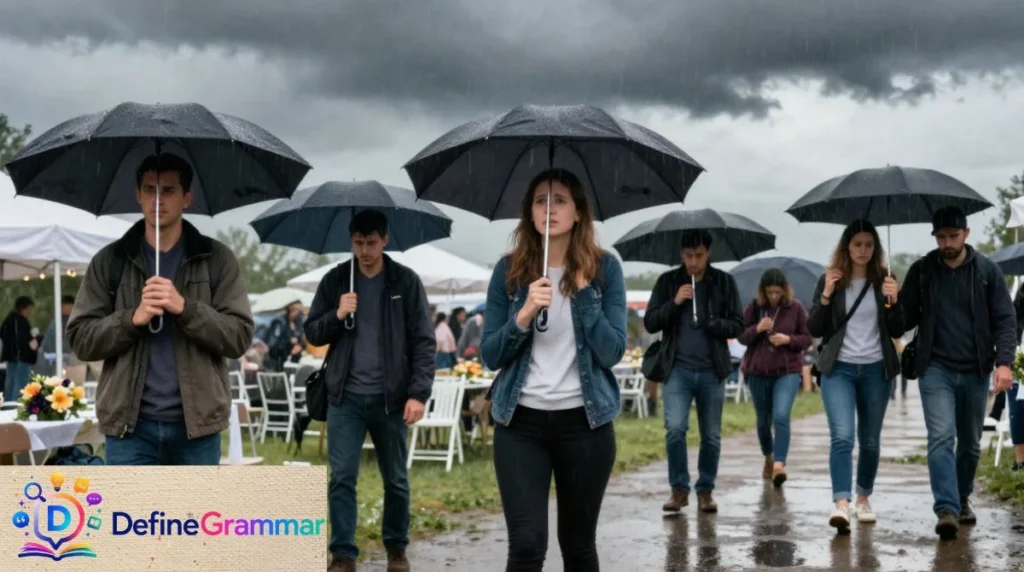
The phrase “Unfortunately, the weather has prevented” is a polite and formal way to explain that bad weather has stopped something from happening. It expresses disappointment while clearly showing that the situation was beyond anyone’s control. This expression is commonly used in business emails, school announcements, travel updates, sports events, and everyday conversations.
For example, if heavy rain forces an outdoor event to be canceled, you might say, “Unfortunately, the weather has prevented us from holding today’s event.” Similarly, airlines, tour operators, and event organizers often use this phrase when informing customers about delays or cancellations caused by storms, snow, or strong winds.
This expression is especially useful because it sounds professional and empathetic. It acknowledges the inconvenience while explaining the reason in a respectful manner. Whether you are writing a formal notice or speaking to friends, this phrase communicates the message clearly and naturally.
Example sentences:
- Unfortunately, the weather has prevented us from completing the construction work today.
- Unfortunately, the weather has prevented the flight from departing on schedule.
- Unfortunately, the weather has prevented our team from practicing outdoors.
- Unfortunately, the weather has prevented visitors from enjoying the festival.
- Unfortunately, the weather has prevented the delivery from arriving on time.
We Cannot Continue Because of the Weather
“We cannot continue because of the weather” is a direct and easy-to-understand sentence used when weather conditions make it impossible or unsafe to carry on with an activity. It is suitable for both spoken and written English and is often heard during outdoor events, road trips, construction projects, and sporting competitions.
This phrase clearly states that the activity must stop due to weather-related conditions such as heavy rain, thunderstorms, snow, strong winds, or extreme heat. It leaves little room for misunderstanding and helps people understand why plans have changed.
In formal situations, this sentence may be used in announcements or reports. In everyday conversation, it provides a straightforward explanation without placing blame on anyone.
Example sentences:
- We cannot continue because of the weather, so the match has been postponed.
- We cannot continue because of the weather until the storm passes.
- We cannot continue because of the weather, and everyone’s safety comes first.
- We cannot continue because of the weather, so please return tomorrow.
- We cannot continue because of the weather conditions affecting the worksite.
Due to Inclement Weather

“Due to inclement weather” is a formal expression frequently used in official announcements, public notices, school communications, airline notifications, and business correspondence. The adjective inclement refers to harsh or severe weather conditions, including heavy rain, snow, ice, thunderstorms, hurricanes, or strong winds.
Because it sounds professional and concise, this phrase is widely used when explaining delays, closures, cancellations, or schedule changes. It is particularly common in written communication where a formal tone is appropriate.
You will often see this expression on websites, emails, road signs, and transportation updates. It quickly informs readers that adverse weather conditions are responsible for the disruption.
Example sentences:
- Due to inclement weather, all outdoor activities have been canceled.
- Due to inclement weather, the school will remain closed today.
- Due to inclement weather, flights may experience significant delays.
- Due to inclement weather, the concert has been rescheduled.
- Due to inclement weather, road travel is strongly discouraged.
Due to the Poor Weather
“Due to the poor weather” is a simple and natural expression used to explain that unfavorable weather has affected plans or activities. Unlike “inclement weather,” which sounds more formal, “poor weather” is suitable for everyday conversations as well as informal writing.
Poor weather may include rain, fog, snow, high winds, or any conditions that make outdoor activities difficult or unpleasant. This phrase is commonly used when discussing travel delays, canceled events, interrupted work, or changes in personal plans.
Because it is easy to understand, learners of English often prefer this expression when speaking with friends, colleagues, or family members.
Example sentences:
- Due to the poor weather, the picnic was canceled.
- Due to the poor weather, traffic moved very slowly.
- Due to the poor weather, farmers postponed harvesting their crops.
- Due to the poor weather, the hiking trip was delayed.
- Due to the poor weather, attendance at the event was lower than expected.
The Weather Has Postponed Our Plans
“The weather has postponed our plans” is a natural and conversational expression used when bad weather forces people to delay an activity instead of canceling it completely. The emphasis is on the fact that the plans will likely happen at a later time when conditions improve.
This phrase is often used when discussing vacations, outdoor celebrations, sporting events, construction work, or family gatherings. It conveys disappointment while also suggesting optimism that the activity can be rescheduled.
Although weather cannot literally make decisions, English speakers commonly use this type of personification to make sentences sound more engaging and natural.
Example sentences:
- The weather has postponed our plans for a beach picnic.
- The weather has postponed our plans until next weekend.
- The weather has postponed our hiking adventure once again.
- The weather has postponed our outdoor wedding rehearsal.
- The weather has postponed our community cleanup event.
I’m Afraid the Weather Has Gotten in the Way
“I’m afraid the weather has gotten in the way” is a polite and empathetic expression used when delivering disappointing news. The phrase “I’m afraid” softens the message, making it sound considerate rather than abrupt. Meanwhile, “gotten in the way” means that something has created an obstacle or prevented plans from moving forward.
This expression is common in spoken English and informal emails. It is especially useful when apologizing for delays or explaining why an arrangement cannot proceed as expected. Native speakers often choose this phrase because it sounds warm, natural, and conversational.
Whether you are canceling a meeting, postponing a trip, or explaining a delay, this expression helps communicate the situation politely while acknowledging the other person’s disappointment.
Example sentences:
- I’m afraid the weather has gotten in the way of our travel plans.
- I’m afraid the weather has gotten in the way, so we’ll have to postpone the event.
- I’m afraid the weather has gotten in the way of today’s construction work.
- I’m afraid the weather has gotten in the way, and the match cannot continue.
- I’m afraid the weather has gotten in the way, but we’ll arrange another date soon.
Adverse Weather
Adverse weather refers to weather conditions that are unpleasant, dangerous, or disruptive to normal activities. It can include heavy rain, thunderstorms, strong winds, snow, ice, extreme heat, dense fog, or other conditions that make travel and outdoor activities difficult. The phrase is commonly used in professional, workplace, transportation, emergency, and official contexts.
For example, if heavy rain and strong winds make driving unsafe, you might describe the situation as adverse weather conditions. Similarly, an airline may delay a flight because of adverse weather, or a company may advise employees to work from home when severe weather affects transportation.
The word adverse means unfavorable or harmful, so “adverse weather” generally emphasizes the negative effects of the weather rather than simply describing what the weather is like. It does not always mean extremely dangerous weather; it can also describe conditions that cause inconvenience, delays, or difficulties.
Example: “The event was canceled due to adverse weather conditions.”
In everyday conversation, people may use simpler expressions such as bad weather, severe weather, unfavorable weather, or difficult weather conditions. However, adverse weather sounds more formal and is particularly useful in professional writing, announcements, reports, and official communication.
Inclement Weather Meaning
Inclement weather means unpleasant, severe, or unfavorable weather that can make normal activities, travel, work, or outdoor events difficult or unsafe. The term is often associated with conditions such as heavy rain, strong winds, snow, ice, storms, or other harsh weather.
The word inclement means harsh or unfavorable, so inclement weather is essentially a formal way of referring to bad or difficult weather. It is frequently used in workplace notices, school announcements, travel information, event updates, and professional communication.
For example, a school might say, “Classes have been canceled due to inclement weather.” A company could write, “Employees are encouraged to exercise caution when traveling during inclement weather.”
Although inclement weather and adverse weather are very similar, there is a slight difference in emphasis. Inclement weather usually highlights the unpleasant or harsh nature of the weather itself, while adverse weather often focuses on how weather conditions negatively affect people, travel, work, or plans.
In casual conversation, bad weather, rough weather, or harsh weather may sound more natural. In formal or professional writing, however, inclement weather is a polished expression that clearly communicates that weather conditions may interfere with normal activities.
Conclusion
Knowing many ways to express the same idea is one of the most powerful skills in English communication. “Due to weather conditions” is perfectly correct — but having 23 alternatives at your fingertips means you can always choose the right phrase for the right moment.
Formal emails need different language than casual texts. Safety notices need stronger words than event invitations. When you match your phrase to your context, your writing becomes clearer, more confident, and more professional.

Riaz Ahmad is the founder and writer at DefineGrammar.com, dedicated to simplifying English grammar for students and writers worldwide. With a passion for language, he breaks down complex grammar rules into clear, practical lessons, helping readers write with confidence and clarity every day.