People use “and/or” a lot. It shows up in essays, emails, contracts, and everyday writing. But this little phrase can feel clunky. It can also confuse readers. Many writing teachers and editors actually discourage it because it looks messy on the page.
That’s why learning other ways to say “and/or” is so useful. The right alternative makes your writing clearer, smoother, and more natural. It also shows that you understand tone. A casual email and a formal essay should not sound the same.
Here’s a quick contrast. Formal: “Students may submit a written report or a recorded presentation, or both.” Informal: “You can send a report, a video, or whatever works for you.” Same idea, very different feel.
This guide gives you simple definitions, real examples, and clear tone notes so you always pick the right phrase for the right moment.
What Does “And/Or” Mean?
“And/or” is a phrase used to show that two options can happen together or separately. It tells the reader: choose one, choose the other, or choose both. It is not a single word. It functions as a conjunction-like phrase joining two ideas with flexible meaning.
Grammar form: hybrid conjunction (combination of “and” + “or”)
Synonyms: or both, either or, as well as, possibly both
Opposite tone: “either…or” (which forces a strict single choice)
Sample sentences:
- “Bring a laptop and/or a notebook to class.”
- “The manager and/or the supervisor will approve your leave.”
When to Use “And/Or”
Spoken English: Rarely used. People usually just say “or both” instead.
Business English: Common in policies, contracts, and instructions where flexibility matters.
Emails and Messages: Used sometimes, but smoother alternatives sound more professional.
Social Media: Almost never used. It feels too formal and stiff for casual posts.
Academic Writing: Appears in essays, but many professors prefer clearer phrasing.
Professional Meetings: Spoken alternatives like “or possibly both” are more natural than saying “and slash or.”
Is “And/Or” Polite or Professional?
“And/or” is neutral. It is not rude, but it is not warm either. It sits in a strange middle zone:
- Polite: Yes, it is safe and inoffensive.
- Neutral: It carries no emotion, just logic.
- Strong: Not really. It feels weak and overused.
- Soft: Somewhat, since it avoids forcing a single choice.
- Formal vs Informal: Leans formal, but feels outdated in casual writing.
Etiquette tip: “And/or” works fine in legal or technical writing. In corporate emails or essays, it’s better to choose a smoother alternative for a more polished tone.
Pros & Cons of Using “And/Or”
✔ Pros:
- Saves space by combining two ideas
- Useful in legal and technical contexts
- Clearly shows flexibility between options
✘ Cons:
- Looks unnatural in flowing sentences
- Many style guides discourage it
- Can confuse readers unfamiliar with the symbol
- Sounds robotic in essays and conversations
- Overused in academic writing
Alternatives to “And/Or” (Detailed Examples)
1. Or Both
Meaning: Shows that two choices can happen together.
Explanation: This is the simplest, most natural replacement. It removes the awkward slash and reads smoothly in any sentence.
Grammar Note: Short phrase, functions as a connector.
Example Sentence: “You can email or call, or both, depending on your schedule.”
Best Use: Essays, emails, everyday speech
Worst Use: Very formal legal documents needing precise wording
Tone: Neutral, Friendly
Level: Beginner
Similarity Score: 9/10
Replaceability Tip: Use this whenever you want a natural, easy substitute.
2. As Well As
Meaning: Adds one option to another, often implying both apply.
Explanation: This phrase feels polished and academic. It works well when listing combined requirements.
Grammar Note: Conjunctive phrase
Example Sentence: “The course covers grammar as well as writing skills.”
Best Use: Academic writing, formal essays
Worst Use: Casual texting
Tone: Formal, Professional
Level: Intermediate
Similarity Score: 7/10
Replaceability Tip: Best when both items are expected to occur together, not optionally.
3. In Addition To
Meaning: Shows something extra added to the first idea.
Explanation: This works when one option naturally supports or extends the other.
Grammar Note: Prepositional phrase
Example Sentence: “Students need a passport in addition to a visa.”
Best Use: Formal writing, instructions
Worst Use: Casual conversation
Tone: Formal
Level: Intermediate
Similarity Score: 7/10
Replaceability Tip: Use when the second item is required alongside the first.
4. Either One or Both
Meaning: Clearly states the choice includes one, the other, or both together.
Explanation: This is the clearest, most direct way to express the same meaning as “and/or.”
Grammar Note: Explanatory phrase
Example Sentence: “You may submit either one or both documents.”
Best Use: Academic and business writing
Worst Use: Quick informal chats
Tone: Neutral, Clear
Level: Intermediate
Similarity Score: 10/10
Replaceability Tip: Perfect when clarity matters more than style.
5. Combined With
Meaning: Suggests two things working together as one unit.
Explanation: This phrase highlights partnership between two ideas rather than separate choice.
Grammar Note: Past participle phrase
Example Sentence: “Hard work combined with patience leads to success.”
Best Use: Essays, motivational writing
Worst Use: Strict instructions needing exact options
Tone: Formal, Inspirational
Level: Intermediate
Similarity Score: 6/10
Replaceability Tip: Use when emphasizing teamwork between two ideas.
6. Together With
Meaning: Joins two items as a single combined group.
Explanation: Slightly more formal than “with,” often used in official writing.
Grammar Note: Prepositional phrase
Example Sentence: “The form, together with your ID, must be submitted.”
Best Use: Business letters, formal requests
Worst Use: Casual speech
Tone: Formal
Level: Intermediate
Similarity Score: 6/10
Replaceability Tip: Use for official submissions or paired requirements.
7. Or Alternatively
Meaning: Offers a second option as another possible choice.
Explanation: Common in spoken and written English when presenting options politely.
Grammar Note: Adverb phrase
Example Sentence: “You can pay online, or alternatively, visit the office.”
Best Use: Emails, conversations, instructions
Worst Use: Strict legal phrasing
Tone: Polite, Professional
Level: Intermediate
Similarity Score: 7/10
Replaceability Tip: Use when introducing options in a friendly tone.
8. Whichever Applies
Meaning: Lets the reader decide which option fits their situation.
Explanation: Useful in forms, instructions, and guidelines.
Grammar Note: Phrase, often used at sentence end
Example Sentence: “Choose email or phone, whichever applies to your case.”
Best Use: Instructions, forms
Worst Use: Casual storytelling
Tone: Neutral, Professional
Level: Intermediate
Similarity Score: 8/10
Replaceability Tip: Great for instructional or procedural writing.
9. Or a Combination of the Two
Meaning: Clearly states that both options can be mixed together.
Explanation: A longer, very precise phrase often used in academic essays.
Grammar Note: Noun phrase
Example Sentence: “Success depends on talent, effort, or a combination of the two.”
Best Use: Essays, research writing
Worst Use: Quick messages
Tone: Formal, Analytical
Level: Advanced
Similarity Score: 9/10
Replaceability Tip: Ideal for essays discussing causes or factors.
10. Plus
Meaning: A casual way to add one thing to another.
Explanation: Very informal, often used in speech or texting.
Grammar Note: Informal connector
Example Sentence: “Bring snacks plus drinks for the trip.”
Best Use: Texting, casual talk
Worst Use: Formal essays
Tone: Casual, Friendly
Level: Beginner
Similarity Score: 5/10
Replaceability Tip: Use only in relaxed, informal writing.
11. Not Limited to Either
Meaning: Shows that the choice isn’t restricted to just one option.
Explanation: Common in formal or legal-style writing.
Grammar Note: Formal phrase
Example Sentence: “Applicants are not limited to either degree; both qualify.”
Best Use: Legal, academic writing
Worst Use: Everyday speech
Tone: Formal
Level: Advanced
Similarity Score: 8/10
Replaceability Tip: Use for precise, rule-based writing.
12. Jointly or Separately
Meaning: States that options may apply together or apart.
Explanation: Often found in contracts and formal agreements.
Grammar Note: Adverbial phrase
Example Sentence: “The partners may act jointly or separately on this matter.”
Best Use: Legal and business documents
Worst Use: Daily conversation
Tone: Formal, Strong
Level: Advanced
Similarity Score: 9/10
Replaceability Tip: Best for contracts or official partnerships.
13. Or Even Both
Meaning: Adds emphasis to the idea that both options are possible.
Explanation: Slightly more expressive and conversational.
Grammar Note: Emphatic phrase
Example Sentence: “You could use logic, emotion, or even both, to persuade readers.”
Best Use: Essays, persuasive writing
Worst Use: Strict technical writing
Tone: Friendly, Expressive
Level: Intermediate
Similarity Score: 8/10
Replaceability Tip: Use to add a natural rhythm to your sentence.
14. Coupled With
Meaning: Shows two elements working closely together.
Explanation: Often used in cause-effect or analytical writing.
Grammar Note: Past participle phrase
Example Sentence: “Poor planning, coupled with bad timing, caused the failure.”
Best Use: Essays, reports
Worst Use: Casual texting
Tone: Formal, Analytical
Level: Advanced
Similarity Score: 6/10
Replaceability Tip: Use when showing a strong relationship between causes.
15. In Conjunction With
Meaning: Indicates two things working at the same time.
Explanation: A very formal, almost technical phrase.
Grammar Note: Prepositional phrase
Example Sentence: “This medicine should be taken in conjunction with food.”
Best Use: Technical, medical, formal writing
Worst Use: Casual speech
Tone: Formal
Level: Advanced
Similarity Score: 6/10
Replaceability Tip: Use in instructional or technical contexts.
16. Or Together
Meaning: Simple way to say both options can be combined.
Explanation: Short and easy, great for everyday writing.
Grammar Note: Short connector phrase
Example Sentence: “Use a pen or pencil, or together if you prefer.”
Best Use: Casual to semi-formal writing
Worst Use: Strict academic essays
Tone: Neutral
Level: Beginner
Similarity Score: 7/10
Replaceability Tip: Use for simple, everyday explanations.
17. Or in Combination
Meaning: States that the items may be mixed or merged.
Explanation: Common in research and scientific writing.
Grammar Note: Formal phrase
Example Sentence: “These methods can be used separately or in combination.”
Best Use: Research papers, essays
Worst Use: Conversational speech
Tone: Formal, Analytical
Level: Advanced
Similarity Score: 9/10
Replaceability Tip: Ideal for comparing methods or strategies.
18. Whether Separately or Jointly
Meaning: Highlights both individual and combined possibilities.
Explanation: A formal, balanced phrase often used in essays.
Grammar Note: Adverbial clause
Example Sentence: “Whether separately or jointly, both factors influence the outcome.”
Best Use: Academic essays
Worst Use: Texting, casual chat
Tone: Formal
Level: Advanced
Similarity Score: 8/10
Replaceability Tip: Use to sound analytical and balanced.
19. Or Some Mix of the Two
Meaning: A relaxed way to express a blend of two options.
Explanation: Friendly and conversational, good for blog-style writing.
Grammar Note: Informal phrase
Example Sentence: “It could be skill, luck, or some mix of the two.”
Best Use: Blogs, casual essays
Worst Use: Formal reports
Tone: Friendly, Casual
Level: Beginner
Similarity Score: 7/10
Replaceability Tip: Use when writing in a relaxed, conversational tone.
20. Not Strictly One
Meaning: Shows the answer isn’t limited to a single choice.
Explanation: Slightly formal, used in argument-based essays.
Grammar Note: Negative phrase
Example Sentence: “The cause is not strictly one factor but several combined.”
Best Use: Persuasive essays
Worst Use: Simple instructions
Tone: Formal, Analytical
Level: Advanced
Similarity Score: 7/10
Replaceability Tip: Use when arguing against a single-cause explanation.
21. As Well As Both
Meaning: Strongly emphasizes that both apply together.
Explanation: Adds clarity when readers might assume only one applies.
Grammar Note: Emphatic phrase
Example Sentence: “The report needs data as well as both charts and analysis.”
Best Use: Reports, essays
Worst Use: Texting
Tone: Formal
Level: Intermediate
Similarity Score: 7/10
Replaceability Tip: Use to avoid confusion about combined requirements.
22. Or a Blend of Both
Meaning: Describes a mixture rather than a strict choice.
Explanation: Creative and smooth, fits well in descriptive writing.
Grammar Note: Descriptive phrase
Example Sentence: “The design uses modern style, classic style, or a blend of both.”
Best Use: Creative essays, blogs
Worst Use: Legal writing
Tone: Friendly, Creative
Level: Intermediate
Similarity Score: 8/10
Replaceability Tip: Great for descriptive or creative essays.
23. Or Both at Once
Meaning: Emphasizes that both can happen at the same time.
Explanation: Adds rhythm and emphasis to a sentence.
Grammar Note: Adverbial phrase
Example Sentence: “You can feel nervous, excited, or both at once.”
Best Use: Narrative essays, personal writing
Worst Use: Formal contracts
Tone: Expressive, Friendly
Level: Intermediate
Similarity Score: 8/10
Replaceability Tip: Use to express emotional or descriptive duality.
24. Whichever Fits, or Both
Meaning: Gives full freedom to choose any option.
Explanation: Casual, flexible phrasing for informal writing.
Grammar Note: Conversational phrase
Example Sentence: “Pick the morning slot, the evening slot, whichever fits, or both.”
Best Use: Casual emails, blogs
Worst Use: Formal essays
Tone: Casual
Level: Beginner
Similarity Score: 7/10
Replaceability Tip: Use in friendly, low-pressure writing.
25. Either…Or, Possibly Both
Meaning: Offers a clear choice while keeping both options open.
Explanation: Balanced and clear, often used in spoken English.
Grammar Note: Correlative phrase
Example Sentence: “Either the manager or the team lead, possibly both, will attend.”
Best Use: Meetings, professional speech
Worst Use: Quick texts
Tone: Professional, Neutral
Level: Intermediate
Similarity Score: 9/10
Replaceability Tip: Excellent for spoken professional settings.
26. Whether One or the Other, or Both
Meaning: Long but very precise way to state flexible choice.
Explanation: Common in essays discussing multiple causes or outcomes.
Grammar Note: Formal clause
Example Sentence: “Whether one or the other, or both, the result remains similar.”
Best Use: Academic essays
Worst Use: Casual chat
Tone: Formal, Analytical
Level: Advanced
Similarity Score: 10/10
Replaceability Tip: Use for detailed, formal argumentation.
27. In Either Case, or Both
Meaning: Suggests the outcome applies no matter the choice.
Explanation: Useful for summarizing flexible conditions.
Grammar Note: Transitional phrase
Example Sentence: “In either case, or both, the policy still applies.”
Best Use: Reports, formal writing
Worst Use: Informal texting
Tone: Formal, Neutral
Level: Advanced
Similarity Score: 8/10
Replaceability Tip: Use when summarizing rules or outcomes.
28. Possibly Together
Meaning: Suggests a soft chance that both options occur together.
Explanation: Light and gentle, fits softer writing styles.
Grammar Note: Adverbial phrase
Example Sentence: “The two ideas may work separately, possibly together.”
Best Use: Reflective essays
Worst Use: Strict business writing
Tone: Soft, Thoughtful
Level: Intermediate
Similarity Score: 7/10
Replaceability Tip: Use in reflective or exploratory essays.
29. One, the Other, or a Mix
Meaning: Casual but clear way to show three possible outcomes.
Explanation: Easy to understand, great for learners.
Grammar Note: Listing phrase
Example Sentence: “You can choose tea, coffee, one, the other, or a mix.”
Best Use: Everyday writing, blogs
Worst Use: Formal essays
Tone: Friendly
Level: Beginner
Similarity Score: 7/10
Replaceability Tip: Use for light, easy-to-read content.
30. Or a Pairing of the Two
Meaning: Suggests two options forming a natural pair.
Explanation: Creative and slightly poetic, good for descriptive essays.
Grammar Note: Descriptive noun phrase
Example Sentence: “The story uses fear, hope, or a pairing of the two.”
Best Use: Creative writing, literature essays
Worst Use: Business reports
Tone: Creative, Formal
Level: Advanced
Similarity Score: 8/10
Replaceability Tip: Use in literary or descriptive analysis.
Mini Dialogue Examples
Formal Dialogue
A: “Should the applicant submit a transcript or a recommendation letter?”
B: “Either one or both will be accepted by the committee.”
Informal Dialogue
A: “Are you bringing snacks or drinks to the party?”
B: “Honestly, snacks, drinks, or some mix of the two. Whatever I find first.”
Business Email Example
“Please note that the deliverable may include a written summary, a visual chart, or a combination of the two. Choose the format that best fits your team’s workflow.”
Mistakes to Avoid
Many learners misuse “and/or” and its alternatives. Watch out for these common errors:
- Using “and/or” too often in one paragraph, which feels repetitive
- Choosing a very formal phrase like “in conjunction with” in casual texts
- Forgetting that some alternatives change the meaning slightly, not just the tone
- Overusing long phrases like “whether one or the other, or both” in short sentences
- Mixing formal and informal alternatives in the same paragraph
- Using “and/or” in spoken English, where it sounds unnatural
- Forgetting commas needed around phrases like “or alternatively”
Cultural & Tone Tips
In UK English, writers often avoid “and/or” in formal essays and prefer phrases like “or possibly both” for smoother flow.
In US English, “and/or” appears more often in business and legal writing, but everyday speech still favors simpler alternatives.
In casual social English, native speakers almost never say “and/or” out loud. They naturally say things like “or both” or “whatever works.”
Comparison Table
| Phrase | Tone | Best Context | Professional Level | Example |
|---|---|---|---|---|
| Or both | Neutral | Essays, emails | Medium | “Call or email, or both.” |
| As well as | Formal | Academic writing | High | “Grammar as well as writing.” |
| In addition to | Formal | Instructions | High | “ID in addition to a visa.” |
| Or a combination of the two | Formal | Research essays | High | “Talent or effort, or a combination of the two.” |
| Whichever applies | Neutral | Forms, guidelines | Medium | “Choose whichever applies.” |
| Or alternatively | Polite | Emails | Medium | “Pay online, or alternatively, visit us.” |
| Coupled with | Analytical | Reports | High | “Poor planning coupled with delay.” |
Other Ways to Say “And/Or” in English
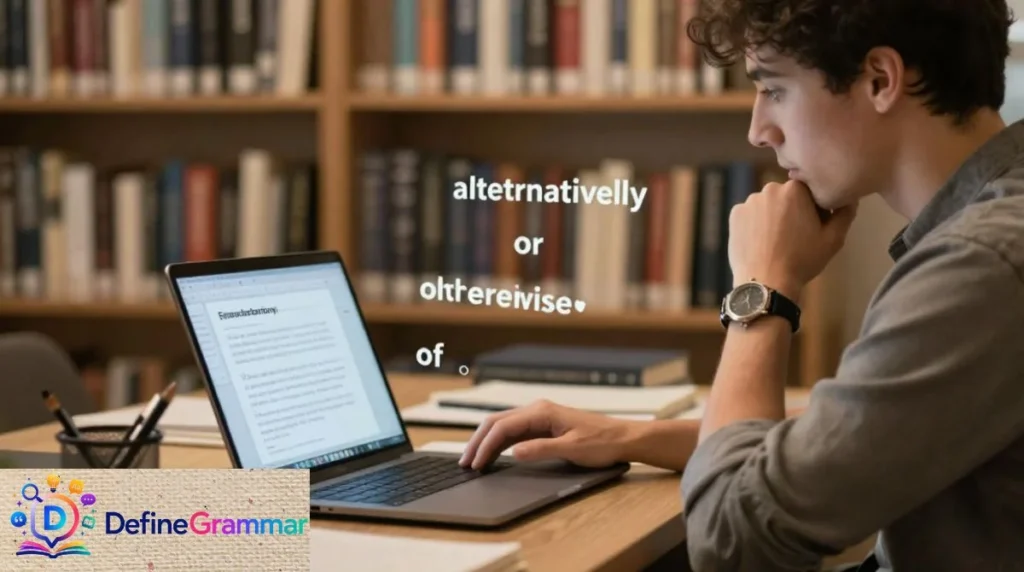
The phrase “and/or” is widely used in legal, academic, and technical writing, but it often feels awkward in modern English. In most cases, writers prefer clearer alternatives that improve readability and flow.
Instead of using “and/or,” you can write “or both,” “either one or both,” or simply restructure the sentence. For example, rather than saying “students may bring a pen and/or pencil,” it is clearer to say “students may bring a pen, a pencil, or both.” This approach removes ambiguity and makes the sentence more natural.
In professional writing, clarity is always preferred over compact but confusing expressions.
Another Word for “Or” in an Essay

The word “or” is simple and effective, but in essays it can feel repetitive if used too frequently. To improve academic tone, writers often use more formal alternatives depending on meaning.
Words like “alternatively,” “otherwise,” and “in place of” can replace “or” in certain contexts. These options are especially useful when presenting comparisons, choices, or consequences in a more structured way.
However, the best technique is often sentence restructuring. Instead of repeatedly using “or,” you can separate ideas into clearer sentences to maintain flow and sophistication.
Another Word for “And/Or”
Although “and/or” is grammatically accepted, it is often criticized for being imprecise and stylistically weak. Professional writers usually avoid it unless absolutely necessary.
Better alternatives include “and or both,” “either or both,” or rewriting the sentence entirely. For example, instead of “You can choose tea and/or coffee,” a clearer version would be “You can choose tea, coffee, or both.”
This not only improves readability but also removes legal or technical stiffness from everyday writing.
Synonyms for “Or” at the Start of a Sentence
Starting a sentence with “or” is generally informal and can weaken academic tone. In formal writing, it is better to use transitional expressions that maintain logical flow.
Common alternatives include “otherwise,” “alternatively,” “if not,” and “on the other hand.” These phrases help connect ideas more smoothly and create a more polished structure.
For example, instead of writing “Or you may choose another option,” you can write “Alternatively, you may choose another option.”
Words to Use Instead of “And Then”
The phrase “and then” is common in storytelling and casual speech, but it is often repetitive in formal writing. Stronger transition words help show sequence more professionally.
Instead of “and then,” you can use “next,” “subsequently,” “afterward,” “thereafter,” or “following this.” These words clearly show time order and improve sentence sophistication.
For example, “He finished his work and then left” can be improved to “He finished his work and subsequently left,” which sounds more refined.
Another Word for “Oar”
The word “oar” refers specifically to a tool used in rowing boats, and it does not have many direct synonyms. However, depending on context, related terms can sometimes be used.
In general language, “paddle” is occasionally used, although it is not technically the same as an oar. In descriptive writing, phrases like “rowing blade” or “rower’s equipment” may appear, but they are less precise.
Because “oar” is already a highly specific term, it is usually best to keep it unchanged.
Words to Use Instead of “And,” “But,” “Or,” “So”
These four conjunctions are essential in English, but overuse can make writing sound simple or repetitive. Academic and professional writing often replaces them with more advanced transitions.
Instead of “and,” use “as well as,” “in addition to,” or “along with.”
Instead of “but,” use “however,” “although,” or “nevertheless.”
Instead of “or,” use “alternatively,” “either,” or “otherwise.”
Instead of “so,” use “therefore,” “thus,” or “consequently.”
These alternatives help create more formal, structured, and persuasive writing.
Words to Use Instead of “And” at the Start of a Sentence
Starting a sentence with “and” is common in informal speech, but in academic writing it is often considered weak style unless used intentionally for effect.
Stronger alternatives include “moreover,” “furthermore,” “in addition,” “also,” and “besides.” These words help connect ideas more professionally and improve logical flow.
For example, instead of “And the results were surprising,” it is better to write “Moreover, the results were surprising,” which sounds more polished and academic.
Frequently Asked Questions
Is “and/or” rude?
No. It is neutral and never sounds rude. It just feels stiff in casual writing.
Is it okay in emails?
Yes, but smoother alternatives like “or possibly both” usually sound more polished.
What is the most formal alternative?
“In conjunction with” and “jointly or separately” are among the most formal choices.
What is the most polite alternative?
“Or alternatively” feels warm, polite, and easy to use in everyday communication.
What should beginners use?
Beginners should start with simple options like “or both” and “plus.”
Can I use “and/or” in academic essays?
You can, but many teachers prefer clearer phrasing like “either one or both” for stronger writing.
Conclusion
Learning different ways to express “and/or” makes your writing stronger and more natural. It helps you match the right tone for essays, emails, and everyday conversations. Instead of repeating the same stiff phrase, you can choose words that fit the moment, whether formal, friendly, or professional. Small changes like this build real fluency over time. Try using a few of these alternatives in your next essay or message. The more you practice, the more natural your English will sound.

Riaz Ahmad is the founder and writer at DefineGrammar.com, dedicated to simplifying English grammar for students and writers worldwide. With a passion for language, he breaks down complex grammar rules into clear, practical lessons, helping readers write with confidence and clarity every day.