Last updated: 31 August 2026
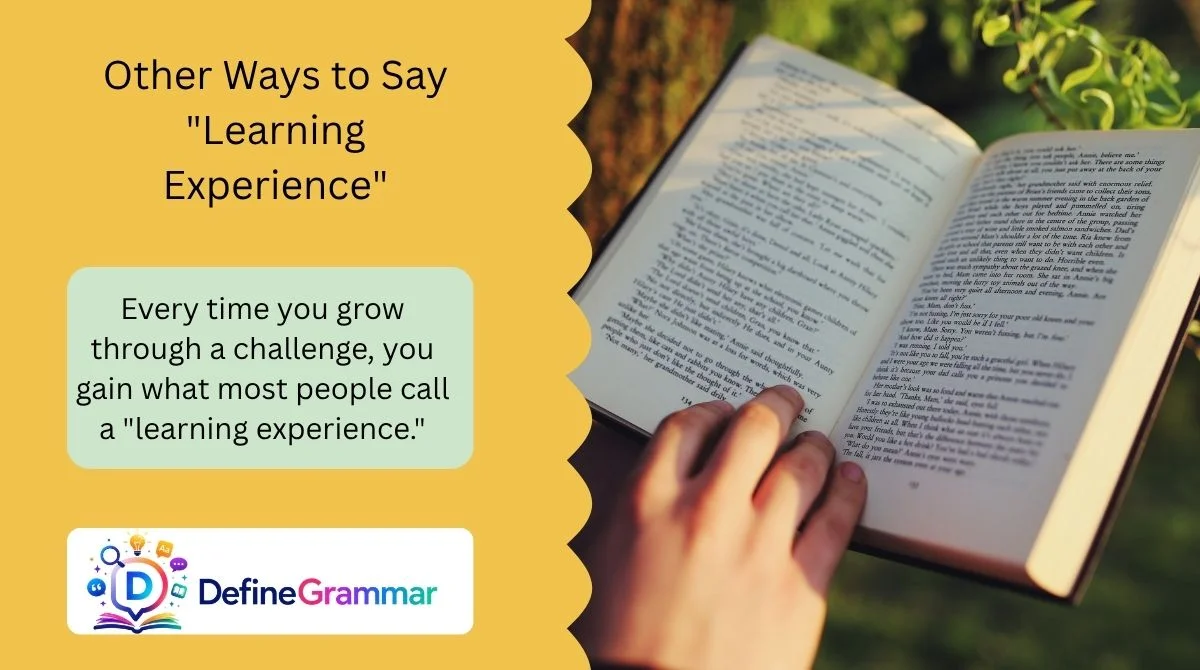
Every time you grow through a challenge, you gain what most people call a “learning experience.” But what if you want to sound more polished in a job interview? More natural in casual conversation? More precise in an academic essay?
The phrase works fine on its own, but repeating it constantly makes your language feel flat. Strong communicators choose words that match the moment — formal when it counts, warm when it matters, and clear always.
Compare these two lines:
- Formal: “This project provided significant professional development opportunities.”
- Informal: “Honestly, it was a real eye-opener.”
Both mean the same thing. One fits a boardroom; the other fits a coffee chat. Knowing which to use — and when — is what separates good English from great English.
What Does “Learning Experience” Mean?
A learning experience is any situation, event, or challenge that teaches you something new — especially something useful for the future. It often carries a positive or neutral tone, even when the experience itself was difficult.
Grammar form: Noun phrase (adjective + noun) Common synonyms: growth opportunity, eye-opener, teachable moment, formative experience
Example: “Failing my first exam was hard, but it turned out to be a learning experience I’ll never forget.”
When to Use It
- Spoken English: Natural and widely understood — great for storytelling.
- Business English: Acceptable but overused; try “professional development opportunity” instead.
- Emails: Works in reflective messages, but avoid it in formal reports.
- Social Media: Slightly generic — “eye-opener” or “game-changer” engages better.
- Academic Writing: Fine, but “formative experience” sounds stronger.
- Meetings: Good for casual talk; use sharper language in performance reviews.
Is It Polite or Professional?
It’s polite, neutral, and safe in almost any setting — but it’s mildly formal at best and lacks real impact. In corporate emails or executive presentations, a sharper phrase like “developmental milestone” makes a stronger impression. In casual speech, it’s perfectly warm and relatable.
Pros and Cons
Pros: universally understood, polite in any context, works for both positive and negative situations, easy for all English levels, emotionally neutral.
Cons: overused and clichéd, vague about what was actually learned, can sound flat in academic or executive writing, lacks emotional or professional weight.
Key Alternatives — Explained
Growth Opportunity
— Forward-looking and optimistic; reframes a challenge as a benefit. Popular in HR and career conversations. “Managing that project was a real growth opportunity for the team.” Best for: workplace emails, LinkedIn. Tone: professional, motivational.
Eye-Opener
— Vivid and natural; suggests genuine surprise or new understanding. “Traveling alone was a real eye-opener.” Best for: casual speech, social media. Avoid in formal writing.
Teachable Moment
— Implies a clear lesson others can learn from too. “The manager used the missed deadline as a teachable moment.” Best for: coaching, leadership, team debriefs.
Formative Experience
— Literary and academic; implies the experience shaped your character. “University taught me resilience — it was a formative experience.” Best for: essays, personal statements, bios.
Valuable Lesson
— Simple, warm, and universally safe. The easiest direct swap for “learning experience.” “Losing that client taught me a valuable lesson about expectations.”
Developmental Milestone
— Formal and achievement-focused; implies measurable progress. “Leading my first team was a developmental milestone.” Best for: performance reviews, CVs.
Transformative Encounter
— Poetic and emotionally weighty; implies lasting change. “Volunteering was a transformative encounter that reshaped my worldview.” Best for: personal essays, speeches. Avoid in business writing — too dramatic.
Professional Development Opportunity
— The gold-standard workplace phrase; formal and career-focused. “The conference was a valuable professional development opportunity.” Best for: appraisals, cover letters, LinkedIn.
Life Lesson
— Warm and human; connects to personal wisdom rather than career skills. “Losing that job was the most important life lesson I’ve had.” Best for: storytelling, mentoring — not corporate reports.
Character-Building Experience
— Slightly humorous, often used ironically for tough situations. “Three months of night shifts was definitely character-building.” Best for: casual storytelling.
Enlightening Experience
— Intellectual and thoughtful; implies new clarity or awareness. “Shadowing the manager was an enlightening experience.” Best for: reflective and academic writing.
Hands-On Experience
— Emphasizes doing over observing; a recruiter favorite. “The internship gave me hands-on experience in marketing.” Best for: CVs, interviews.
Pivotal Moment
— Implies a genuine turning point, not a minor lesson. “Being passed over for promotion was a pivotal moment in my career.” Best for: interviews, personal branding.
Meaningful Challenge
— Honest and mature; acknowledges difficulty while framing it as worthwhile. “Leading through the restructuring was a meaningful challenge.” Best for: leadership reflection.
Educational Journey
— Suggests learning unfolded gradually, not in a single event. “My first five years in the industry were an educational journey.” Best for: personal statements, career reflections.
Real Wake-Up Call
— Punchy and idiomatic; implies a sudden, jolting realization. “Missing that deadline was a real wake-up call.” Best for: casual storytelling, motivational speaking.
Steep Learning Curve
— Describes an intense period of rapid learning rather than one moment. “The first month was a steep learning curve, but I adapted fast.” Best for: interviews, onboarding conversations.
Trial by Fire
— Vivid idiom for learning fast under real pressure. “My first week leading the project was a total trial by fire.” Best for: interviews, leadership stories.
Career-Shaping Experience
— Ties the lesson directly to your professional trajectory. “That internship was a career-shaping experience — it’s why I moved into design.” Best for: LinkedIn, professional bios.
Mini Dialogue Examples
Job Interview
Interviewer: “Tell me about a project that didn’t go as planned.” Candidate: “We missed a launch deadline due to my planning. I treated it as a real professional development opportunity — I overhauled my process and haven’t missed one since.”
Casual Conversation
Friend 1: “How was that sales job you hated?” Friend 2: “Honestly, a total eye-opener. Rough, but a real life lesson too.”
Business Email
Subject: Reflections on Q3 Campaign Results
Hi Sarah, thank you for the Q3 debrief. While results fell short, the process was a genuine knowledge-building opportunity — the customer data alone will shape our approach next year. Let’s schedule a session to capture the key lessons formally.
Best, James
Mistakes to Avoid
- Repeating “learning experience” too often in one piece — vary your language.
- Using formal phrases in casual speech (“formative experience” over lunch feels stiff).
- Picking a phrase too dramatic for the situation (“transformative encounter” for a minor software fix).
- Staying vague after using the phrase — always name what was actually learned.
- Mixing tones in the same piece — stay consistent between casual and formal registers.
Cultural and Tone Tips
US English: Favors upbeat, action-oriented phrases like “growth opportunity” and “hands-on experience.” UK English: Prefers understatement — “character-building experience” and “formative experience” feel natural; avoid overly dramatic phrases like “transformative encounter.” Casual speech: “Eye-opener,” “life lesson,” and “wake-up call” sound most natural day-to-day. Academic writing: “Formative experience” and “educational journey” are safe, credible choices worldwide.
The Learning Experience Blackwood
The Learning Experience Blackwood is a daycare and preschool center in Blackwood, New Jersey, designed to support children from infancy through the preschool years. The center serves children from 6 weeks to 5 years and offers age-specific programs for infants, toddlers, early preschoolers, and preschoolers. (The Learning Experience)
What makes the Blackwood location appealing to families is its focus on learning through play, social development, and everyday experiences. Its L.E.A.P.® curriculum combines early literacy, math, STEM, physical development, creativity, and social-emotional learning. Parents can also receive regular updates, photos, and reports through the center’s communication system. (The Learning Experience)
The Learning Experience Near Me

If you are searching for The Learning Experience near me, the easiest way to find a suitable center is to check locations based on your ZIP code or city. The Learning Experience has centers in many communities, with programs designed for different childhood stages. (The Learning Experience)
Before choosing a location, parents should consider distance, operating hours, available programs, classroom environment, tuition, and enrollment availability. Visiting the center and meeting the teaching team can also help you decide whether it feels like the right fit for your child and family.
Valuable Learning Experience Synonym
A valuable learning experience is an event or situation that teaches an important lesson, improves your skills, or changes your perspective in a meaningful way. It often refers to both positive and challenging moments that contribute to personal or professional growth.
Here are some excellent synonyms for valuable learning experience:
- Eye-opening experience
- Educational experience
- Enriching experience
- Growth opportunity
- Character-building experience
- Transformative experience
- Meaningful lesson
- Insightful experience
- Developmental experience
- Life lesson
- Learning opportunity
- Skill-building experience
- Formative experience
- Enlightening experience
- Rewarding experience
- Knowledge-building experience
- Memorable lesson
- Personal growth experience
- Professional development experience
- Constructive experience
These alternatives work well in resumes, academic writing, interviews, business communication, and everyday conversations.
Examples
- Volunteering abroad was an eye-opening experience that broadened my worldview.
- Every challenge became a growth opportunity that strengthened my confidence.
- The internship proved to be a transformative experience for my career.
- Managing the project was a skill-building experience that improved my leadership abilities.
Another Word for Learning New Things
Learning new things is a lifelong process that helps people expand their knowledge, improve their abilities, and adapt to changing situations. Depending on the context, many words and phrases can express this idea.
Here are strong alternatives to learning new things:
- Gaining knowledge
- Acquiring skills
- Expanding knowledge
- Broadening horizons
- Continuous learning
- Lifelong learning
- Skill development
- Self-education
- Personal growth
- Professional development
- Knowledge acquisition
- Intellectual growth
- Discovering new ideas
- Educational development
- Mastering new skills
- Building expertise
- Exploring new concepts
- Advancing knowledge
- Learning journey
- Self-improvement
Examples
- Reading every day supports continuous learning.
- Workshops help employees with skill development.
- Traveling encourages broadening horizons.
- Online courses make knowledge acquisition more accessible.
Learning Experience Meaning
A learning experience is any event, activity, or situation that helps a person gain knowledge, develop skills, improve understanding, or change their perspective. Learning experiences can happen in classrooms, workplaces, daily life, relationships, travel, or even through mistakes.
A meaningful learning experience often includes:
- Gaining practical knowledge
- Developing new abilities
- Solving real-world problems
- Learning from successes and failures
- Building confidence
- Improving decision-making
- Expanding personal or professional perspectives
Learning experiences do not always come from formal education. Everyday challenges, conversations, volunteer work, internships, and personal achievements can all become valuable learning opportunities.
Example Sentences
- Starting my first business was a valuable learning experience.
- Every mistake became a meaningful learning experience.
- Working with diverse teams provided an excellent learning experience.
- Traveling overseas offered an unforgettable learning experience.
Synonyms for Learning
The word learning can describe the process of gaining knowledge, understanding, or skills. Different situations may require different alternatives.
Common synonyms for learning include:
- Education
- Knowledge
- Understanding
- Study
- Training
- Instruction
- Schooling
- Skill development
- Knowledge acquisition
- Intellectual growth
- Self-education
- Discovery
- Enlightenment
- Research
- Exploration
- Practice
- Improvement
- Development
- Experience
- Awareness
Examples
- Continuous education is essential for career success.
- Practical training improves workplace performance.
- Curiosity leads to lifelong discovery.
- Reading encourages intellectual growth.
Formative Experience Synonym
A formative experience is an event that significantly influences someone’s personality, beliefs, skills, or future decisions. These experiences often shape who a person becomes over time.
Useful synonyms include:
- Defining experience
- Life-changing experience
- Transformative experience
- Character-building experience
- Influential experience
- Developmental experience
- Milestone experience
- Pivotal experience
- Turning point
- Foundational experience
- Shaping experience
- Significant life event
- Memorable lesson
- Growth experience
- Eye-opening experience
- Inspirational experience
- Crucial experience
- Landmark experience
- Impactful experience
- Meaningful event
Examples
- College was a defining experience in her life.
- His first leadership role became a character-building experience.
- Volunteering was a pivotal experience that inspired his career.
Formative Experience Meaning
A formative experience is an important event or period that shapes a person’s character, values, behavior, beliefs, or future decisions. These experiences usually occur during childhood, adolescence, or early adulthood, although significant events later in life can also be formative.
Formative experiences may include:
- Education
- Family influences
- Travel
- Career milestones
- Volunteer work
- Personal challenges
- Cultural exposure
- Mentorship
- Achievements
- Overcoming adversity
These experiences often leave a lasting impact and influence how people think, solve problems, communicate, and make decisions throughout their lives.
Example Sentences
- Studying abroad was a formative experience that changed her outlook.
- Losing his first job became a formative experience that taught resilience.
- Growing up in a multicultural community was a formative experience.
What Are Your Key Takeaways Learnings from the Content
Key takeaways are the most important lessons, insights, or practical ideas gained after reading, watching, or listening to content. They summarize the main points that readers can remember and apply in real-life situations.
Common key takeaways may include:
- A deeper understanding of the topic
- Practical strategies to apply immediately
- New perspectives and ideas
- Important facts or statistics
- Skills that improve performance
- Better decision-making techniques
- Increased awareness of common mistakes
- Actionable steps for future improvement
- Greater confidence in applying the information
- Motivation for continued learning
Example Responses
- My key takeaway is the importance of continuous learning and adaptability.
- I learned practical strategies that I can implement immediately.
- The content reinforced the value of consistent improvement.
- I gained a clearer understanding of best practices and common challenges.
Synonyms for Experience
The word experience can refer to knowledge gained through practice, a particular event, or expertise developed over time. The best synonym depends on the context.
Synonyms for an Event
- Encounter
- Occasion
- Incident
- Episode
- Adventure
- Happening
- Journey
- Event
- Situation
- Memory
Synonyms for Knowledge or Expertise
- Expertise
- Skill
- Practice
- Background
- Competence
- Proficiency
- Know-how
- Mastery
- Familiarity
- Capability
Synonyms for Personal Growth
- Lesson
- Learning opportunity
- Insight
- Discovery
- Development
- Milestone
- Turning point
- Growth experience
- Life lesson
- Eye-opener
Example Sentences
- Years of expertise helped her solve complex problems.
- The internship provided valuable practical experience.
- It was an unforgettable adventure that changed his perspective.
- Every challenge became an important life lesson.
What For Should You Choose a More Specific Phrase Than “Learning Experience”?
The answer is simple: you should choose a more specific phrase whenever “learning experience” fails to tell the reader what actually happened, what was learned, or why it mattered. Vagueness is the real problem with the phrase — not its grammar, not its tone, but its complete lack of information about the experience itself.
Here are the situations where choosing something more precise makes a measurable difference:
When You Are in a Job Interview
Interviewers hear “it was a great learning experience” dozens of times per hiring cycle. The phrase signals that something went wrong but tells them nothing about how you responded or what you took away from it. “It was a steep learning curve that taught me how to manage competing deadlines under real pressure” gives the interviewer something to evaluate. The more specific phrase does the work the vague one only promises to do.
When You Are Writing a CV or Cover Letter
A CV is a document of evidence, not impressions. “Hands-on experience in client management” is evidence. “A learning experience in communication” is not. Recruiters scan for concrete language that maps directly to the skills they need. Specific alternatives like “developmental milestone,” “career-shaping experience,” or “professional development opportunity” signal that you understand what you gained and can articulate its professional value.
When You Are Reflecting Publicly on a Failure
Leaders, speakers, and writers who reflect on setbacks publicly earn credibility through honesty and specificity. Saying a failed project was “a learning experience” sounds defensive. Saying it was “a pivotal moment that reshaped how I approach risk” sounds self-aware and mature. The stronger phrase shows the reader that real reflection happened, not just damage control.
When You Are Writing Academically
Academic writing rewards precision above almost everything else. “Formative experience” signals that the event had lasting developmental impact. “Transformative encounter” suggests a fundamental shift in perspective. “Learning experience” does neither — it describes the category of event without saying anything meaningful about its nature or effect. In an essay or personal statement, the sharper phrase earns more respect from the reader.
When You Are Giving Feedback or Coaching Someone Else
Telling someone their failure was “a learning experience” can feel dismissive, as if you are minimizing what they went through. “Teachable moment” reframes it as something shared and instructive. “Meaningful challenge” acknowledges that it was genuinely hard before noting its value. The word choice changes the emotional register of the feedback entirely, from brushing something off to honoring it.
The underlying principle is consistent across every situation: the more specific your phrase, the more confident, credible, and precise you sound. “Learning experience” holds a place in the sentence. A better alternative fills it.
Frequently Asked Questions
What can I say instead of experience?
You can use words like encounter, involvement, expertise, exposure, background, journey, practice, or adventure instead of experience. The best choice depends on whether you’re referring to skills, personal growth, or memorable events.
What is a learning experience called?
A learning experience is often called a lesson, growth opportunity, educational journey, teaching moment, developmental experience, or life lesson. These terms highlight the knowledge and personal development gained from an event.
What is a synonym for learning moments?
Common synonyms for learning moments include teachable moments, growth moments, valuable lessons, moments of discovery, defining moments, and eye-opening experiences. They describe situations that inspire learning and self-improvement.
What can I say instead of learning experience?
Instead of learning experience, you can say educational experience, formative experience, enriching journey, developmental process, knowledge-building experience, or growth opportunity. These alternatives sound natural and professional in both writing and conversation.
What is a synonym for memories or moments?
Depending on the context, you can use recollections, milestones, highlights, cherished memories, memorable occasions, keepsakes, snapshots, or life events. These words express meaningful experiences and unforgettable moments in a thoughtful and engaging way.
Conclusion
“Learning experience” does its job, but language is most powerful when it’s precise and tuned to the moment. Whether you’re writing a cover letter, telling a story, or reflecting in a team meeting, the right phrase makes you more memorable.
Start by identifying the tone you need: professional and measurable, warm and personal, or vivid and idiomatic. Then pick the alternative that fits that register instead of defaulting to the same safe phrase every time. Practice these variations in real emails, interviews, and conversations, and your writing — and speaking — will sound noticeably more confident, specific, and fluent.

Riaz Ahmad is the founder and writer at DefineGrammar.com, dedicated to simplifying English grammar for students and writers worldwide. With a passion for language, he breaks down complex grammar rules into clear, practical lessons, helping readers write with confidence and clarity every day.